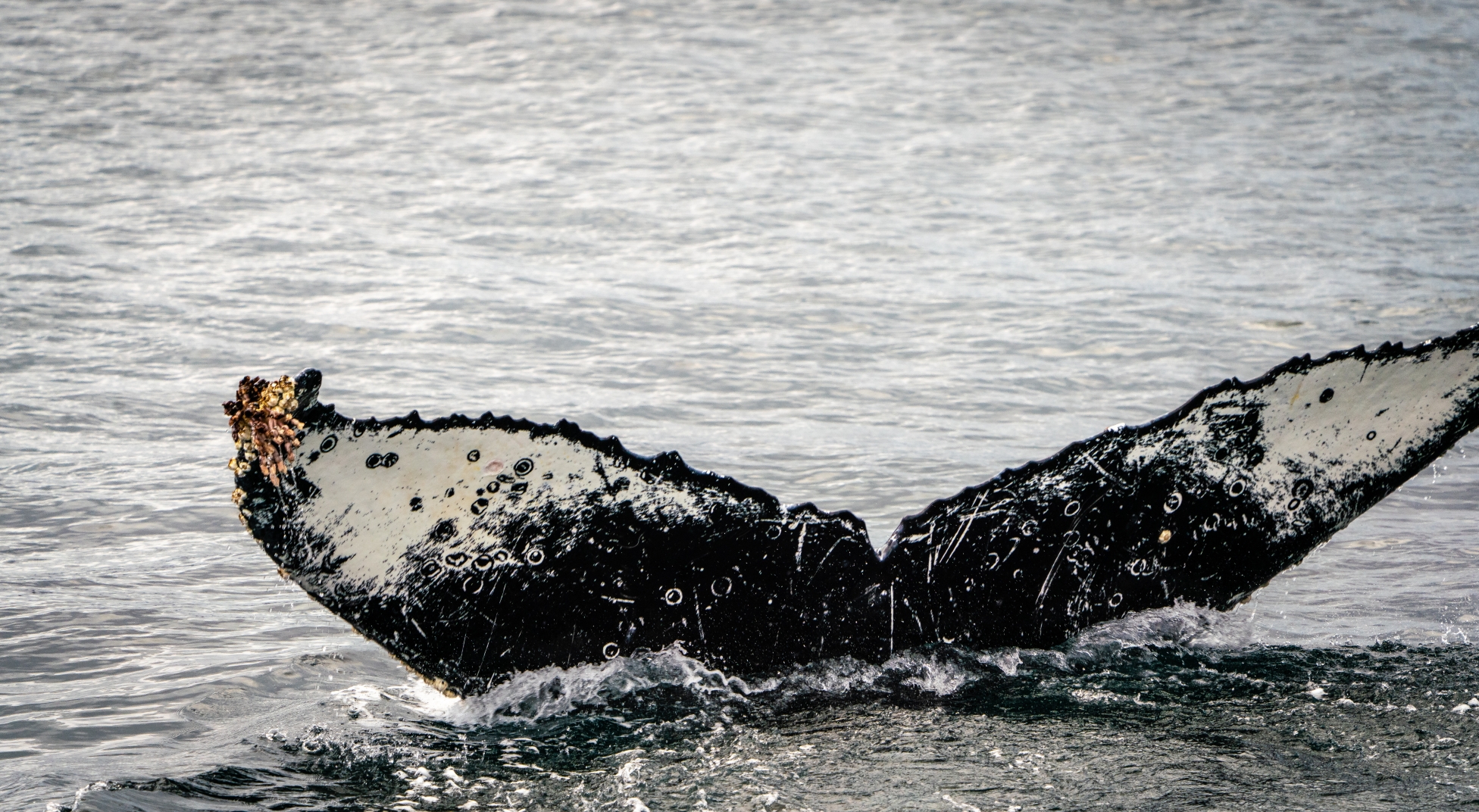
We have been following the situation near Wismar, northern Germany of an entangled and stranded humpback whale which has reportedly stranded at least three times over the last couple of weeks. We have had an increase in requests for assistance from international members of the public, and we wish to explain our standpoint at the time of writing, on 8 April 2026.
Assistance Requests
We were assisted in making contact with several organisations in Europe to invite them to a discussion regarding help and advice about the whale, and we knew they were in contact with the International Whaling Committee’s Strandings Coordinator and other advisors to discuss the options available at the time. We remained hopeful they could find management solutions for the ongoing incident despite the many varied news headlines.
It is important to understand the background of why cetaceans strand before looking at the specifics of the current situation in Germany. Many cetacean strandings happen because they are already unhealthy due to disease, injury, starvation, exhaustion and old age, and they will have already experienced long-term health decline before they come ashore. Therefore stranding is a symptom of a serious underlying problem that is often very difficult, if not impossible, to resolve in an acute stranding situation. In these cases then either palliative care or euthanasia can be considered as alternative welfare options if refloatation has a poor prognosis, and to prevent continued suffering and pain.
It is true that some healthy cetaceans do sometimes strand as well. They may have come ashore while escaping from predators or from navigational error such as following food into unfamiliar surroundings like intertidal estuaries. The impacts of human activity such as disturbance from watercraft and loud underwater noise such as sonar have also been recognised as causes too. These animals often have a much better prognosis and are suitable candidates to trial refloatation to see how they respond.
Limitations of Refloating Attempts
Specifically for the situation in Germany with the humpback whale, from when it first appeared it was already entangled in fishing gear which had resulted in a significant loss of health and nutritional condition and responders were at a significant disadvantage when it came to considering options. Refloatation of an unhealthy animal that would then successfully recover would already be very unlikely. The animal has stranded on at least three occasions now, demonstrating that if refloatation continues then it will very likely come ashore once again as it is too debilitated/close to death that it is no longer able to survive. To continue interventions aimed at refloating a dying animal will mainly achieve greater levels of distress as it is moved, restrands, and repeated again and again.
Notwithstanding this, the whale refloatation pontoons used by BDMLR can lift up to two tons, which is far less than the weight of this whale. They were designed for use on medium sized whales such as pilot and minke whales as a team of people are able to carefully manoeuvre it into the mat that must go underneath to support it. There are sometimes situations two sets can be used on one whale that is a bit larger, but that is all. This is not possible with large whales such as humpbacks, their weight is far too great to be held in this manner and it is not possible to get it into the mat using safe and careful techniques. Lifting or dragging with heavy machinery often causes a great deal more damage and distress to the animal, and is very strongly advised against.
Palliative Care and Euthanasia
Euthanasia is again mainly a consideration for small and medium-sized cetaceans and the two methods currently used in the UK are either through chemical (lethal injection) or ballistic (high powered rifle) means. Unfortunately, at a certain point again the sheer size of the animal is a major limiting factor in what can be achieved successfully. Drug quantities for an animal this size simply don’t exist in veterinary practices or zoos and have a limited shelf life, which means large volumes kept in permanent storage is unviable. Even if it was then there are the logistics of delivering it without contaminating the environment, poisoning other wildlife, and removal of the body afterwards for the same reasons. As for ballistics, the thickness of the blubber and skull mean that even a high-powered rifle will not be effective.
Thus, there is only one option left, which is palliative care/allowing the animal to pass naturally. This is a common situation found worldwide in all countries with large whale strandings, so is not unique to this specific situation in Germany. We are sure many organisations that respond to live stranded cetaceans around the world will view this with similar opinions as we routinely discuss and share knowledge and experience through workshops, conferences and training collaborations. The topic of large whale stranding rescue and euthanasia techniques are a frequent agenda item, and if there were a solution then it would be being put into use, as we would all want to save the animals that are healthy enough to do so, or relieve the suffering of those that are dying. This situation is under regular review and there are many people out there already within these many organisations looking for ways to improve this situation for the future.
Scientific Examination
Discussion about post-mortem use of the whale including scientific studies typically comes from a place of wanting to understand why the mammal stranded and what can be learned for future incidents. These plans may also be put in place to prevent the public from watching a deceased animal decompose, which presents its own challenges to manage. These considerations are never a replacement for care and not a reason to withhold it from a live animal.
Behind the Response
It is understandable that strong public emotion can lead to frustration and a feeling of inaction, and the desire to want help for this mammal is admirable, and heartwarming, that the public care so greatly for marine mammals. It is an incredibly tough situation to be in for everybody including the responders, veterinarians, emergency services and the people observing. Moreso in a situation where large whale strandings are very rare and there can be less awareness generally in the population about the nuanced details of stranding protocols and the many variables and limitations that can affect decision making. We hope our explanation from our perspective and long experience here provides some education and understanding around these situations, and that compassion for the animal can also be shared with those who have been trying hard to help it throughout in very difficult circumstances.
—
We hope that we have shone some light on a very difficult situation, but please contact us if you have further questions that British Divers Marine Life Rescue could answer.