After more than a week without any confirmed sightings, the young walrus nicknamed “Magnus” has now been identified in southern Norway following his journey around north east Scotland.
The walrus, who was first seen with injuries in Orkney, travelled between several harbours and attracted significant public attention over the last few weeks with communities keen to follow his movements. British Divers Marine Life Rescue, alongside Police Scotland and NatureScot, have monitored the walrus during his visits to minimise disturbance and support welfare-led management of each scene.
Walruses are Arctic animals which rely heavily on uninterrupted periods of rest to conserve energy, especially during extensive journeys. Young male walruses particularly have been known to roam widely and can occasionally appear far outside their normal range. While unusual, these visits are increasing around UK coastlines, with climate change and loss of Arctic sea ice believed to be contributing factors.
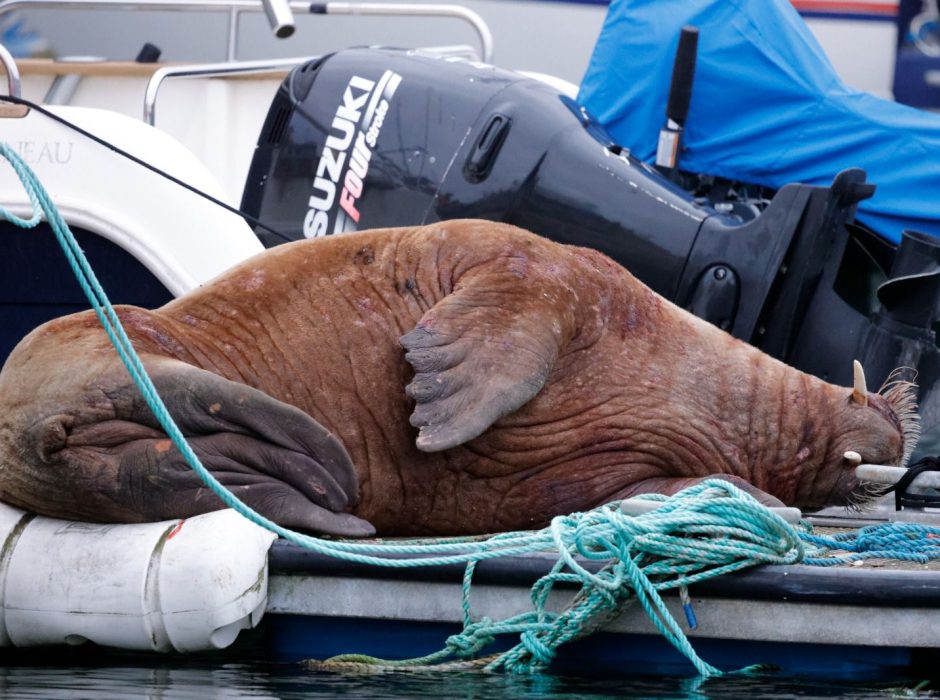
While in Scotland, Magnus was repeatedly seen hauling out in harbours, on pontoons and even aboard a small number of boats to rest. Encouragingly, the vast majority of people who came to see Magnus did so responsibly, keeping drones, noise and dog disturbance to a minimum and respecting cordons put in place to manage crowds. This allowed the walrus valuable opportunities to rest and conserve energy before continuing his onward journey.
Magnus’ arrival in Norway has also lent to reflection on the fate of Freya, the walrus who became internationally infamous after visiting several European countries before later being euthanised in Norway in 2022. This decision was made by government authorities there due to ongoing disturbance from members of the public that they believed made her the threat despite no aggression on her part, instead of implementing crowd control management measures.
Magnus highlights once again the fascination these rare Arctic visitors generate with the wider public, raising awareness over the effects of climate change, and also the importance of responsible wildlife watching. Walruses are protected from disturbance in the UK under the Wildlife and Countryside Act 1981, where giving them space to rest is critical to their welfare and survival during these extraordinary out-of-habitat journeys.