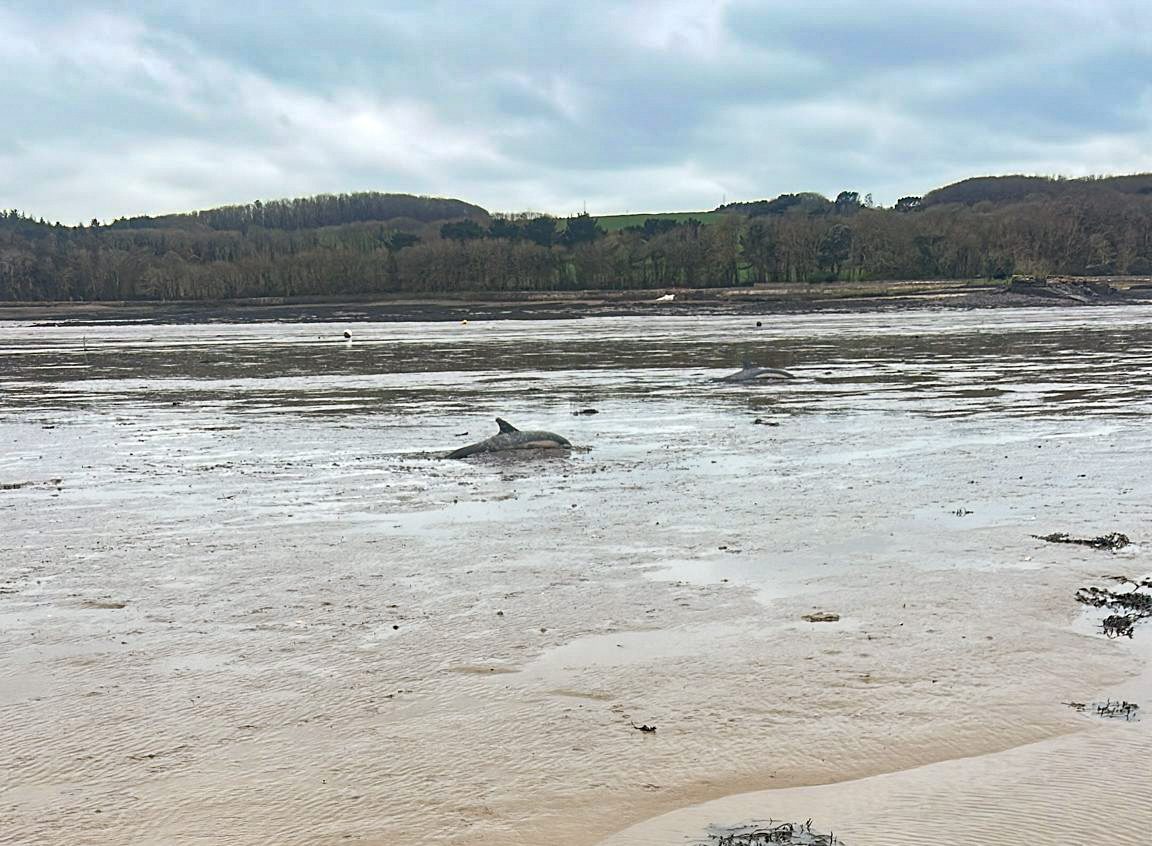
On 3 March, British Divers Marine Life Rescue responded to reports of two live stranded common dolphins at Angle, South Wales.
The animals were located upright in deep mud, with one noticeably larger than the other, suggesting a possible adult and calf pair. Despite the challenging conditions, both dolphins appeared calm and were maintaining an upright position, which helped them continue breathing while awaiting assistance.
The first Medic on scene carried out risk assessments, finding access to the animals required careful planning across unstable mud. With the tide quickly returning, this presented hazards both for the stranded dolphins and the response team. Additional Medics arrived shortly afterwards as the incoming tide began to surround the animals.
Both dolphins refloated on the tide shortly after, and once buoyant both became active in the water, circling towards the deeper channel. The smaller of the two remained closer to shore for a period of time, before moving further away.
BDMLR would like to thank the local Coastguard team for attending the scene and providing safety cover for responders working in challenging tidal conditions. We are also grateful to the members of the public who reported the dolphins to our hotline. Quick reporting is vital during marine mammal strandings, allowing our trained Marine Mammal Medics to respond promptly, assess the animals, and provide appropriate welfare support.
Late last week, two recently deceased dolphins were discovered at Freshwater West, as-of-yet unconfirmed if they are the same individuals involved in the stranding the week before. Initial examination suggested the animals had died within the previous 24 hours of being found. The female adult, which may be related to the smaller animal, shows signs of being compromised which may explain a potential reason for their stranding.
A full post-mortem examination will be carried out by Marine Environmental Monitoring and Cetacean Stranding Investigation Programme, which will help provide valuable information about the animals’ health and the possible causes of their strandings. Investigations such as these play an important role in improving scientific understanding of marine mammal strandings and the pressures these animals may face in the wild.
While not every incident has a positive long term outcome, each response provides valuable insight into the challenges that marine mammals face in the UK and how best we can assist them.
It is vital that if the public find a stranded marine mammal, they avoid putting themselves at risk trying to help, particularly in areas such as mudflats and tidal areas. The safest and most useful action is to report the stranding to BDMLR and keep a safe distance while trained Medics attend.
Photos by Lloyd Hamilton and stock image by Sarah Macdonald-Taylor