
On 6 April 2026, British Divers Marine Life Rescue received a report of a live stranded whale in Moray, Scotland.
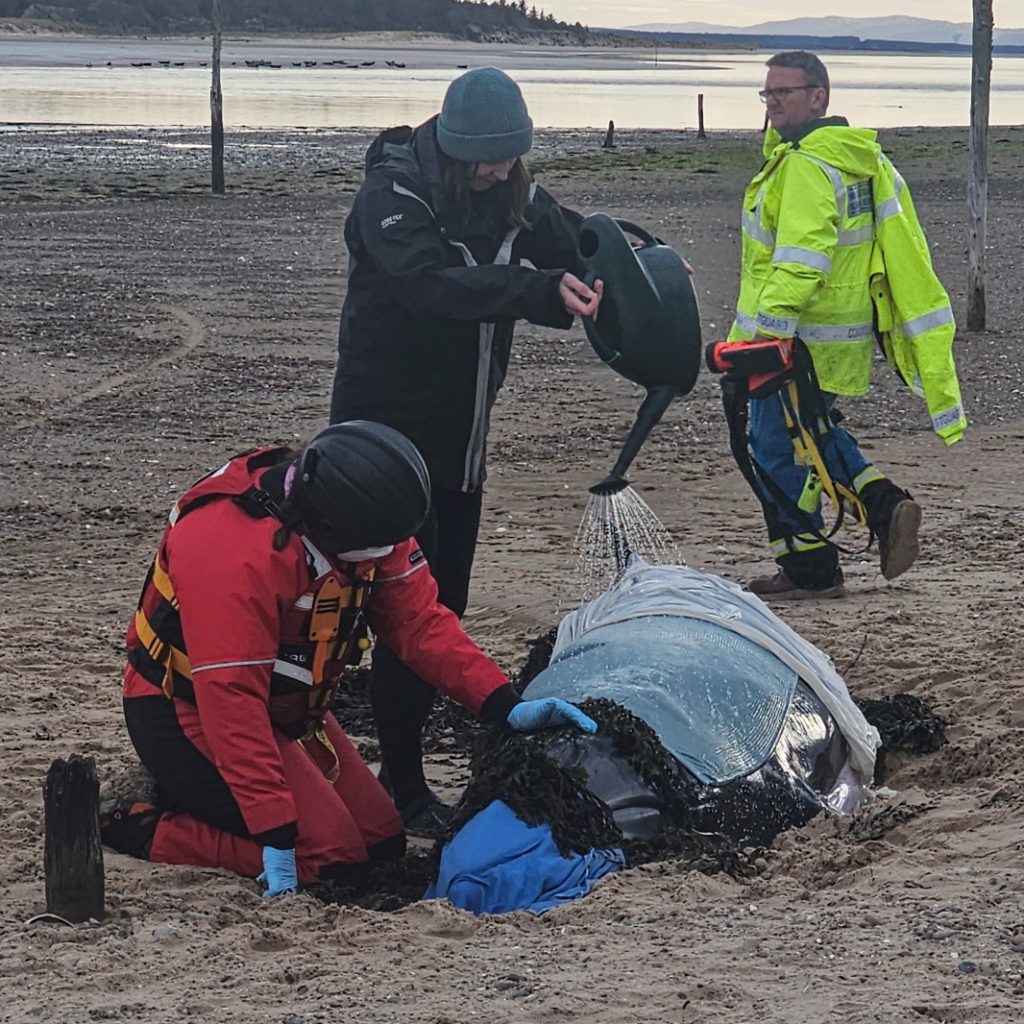
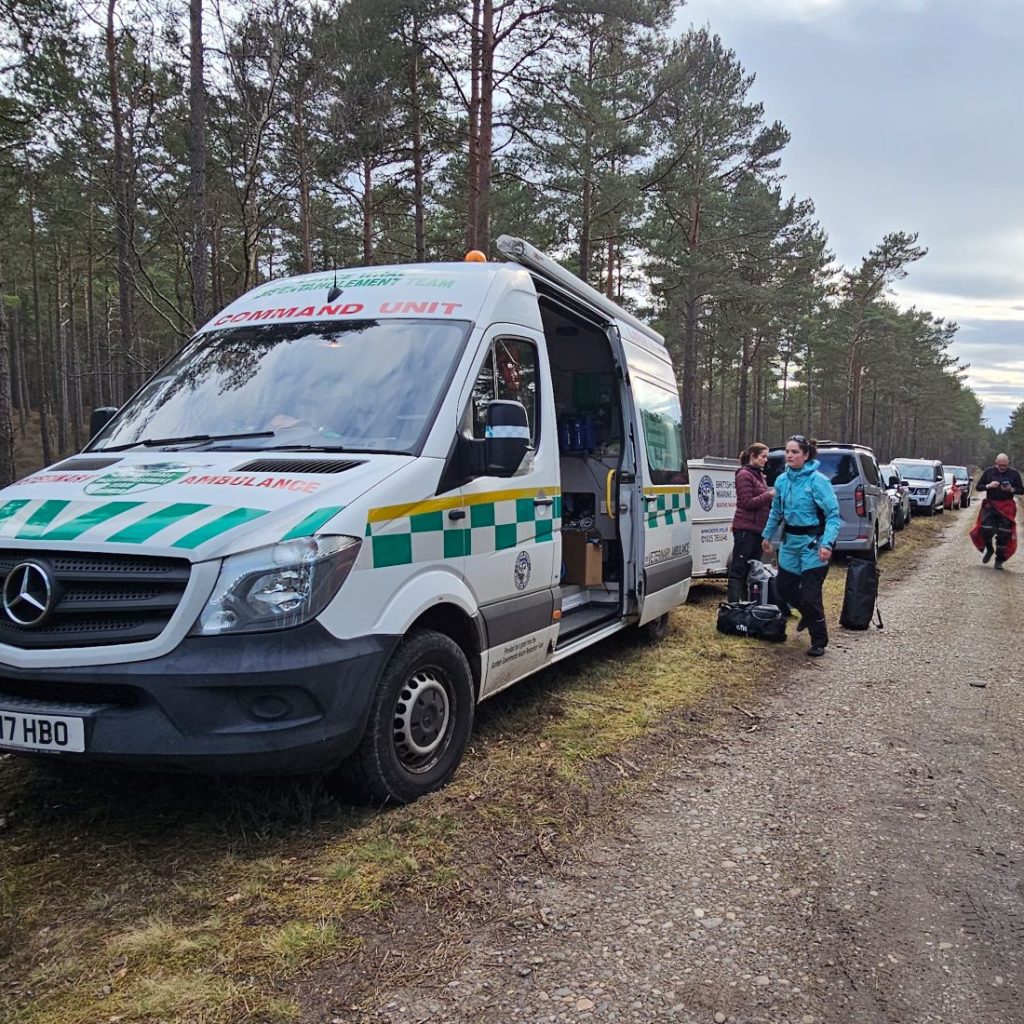
Volunteer Marine Mammal Medics were tasked to Culbin Sands, a remote and logistically challenging coastline. Additional support from HM Coastguard was provided for safety cover and to transport equipment part of the way before the team continued on foot across tidal sands to reach the animal.
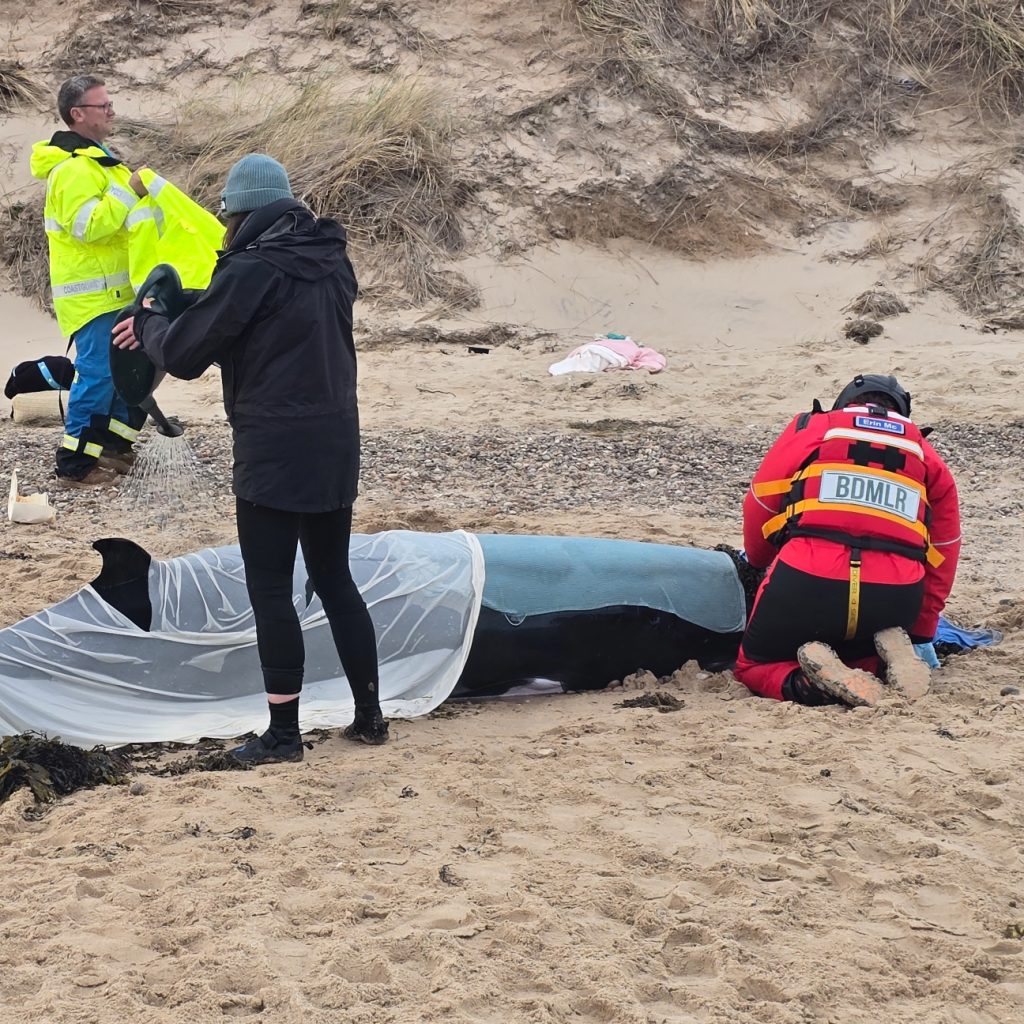
On arrival, the team found a 3.8m long female minke whale stranded a significant distance from the waterline. Initial assessments were carried out alongside Veterinary advisors and BDMLR Head Office with the team providing first aid. The whale showed fluid filled skin damage along the body and was of maternal dependency age (minke whales typically wean around 4.5-5.5m in length).
Based on the stranding position, physical condition and with tidal information, it was determined the animal had likely been stranded in excess of fourteen hours. In cetaceans, extended time out of the water can result in severe physiological compromise including pressure-related trauma to internal organs. Taking all factors into account, the veterinary guidance built from decades of knowledge and experience advised that the young whale was not a suitable candidate for a refloat and the decision was made to humanely euthanise it to stop further suffering.
A post mortem examination was conducted the following day by the Scottish Marine Animal Stranding Scheme, who confirmed the whale to be a juvenile female with no significant underlying disease. There was no evidence of recent feeding, with all sections of the stomachs and intestines empty. Findings also showed evidence of water aspiration in both of the lungs along with congestion of internal organs. The findings support the assessment that the animal had been stranded for a prolonged period.
The post-mortem findings reinforce that the decision to euthanise was appropriate and in the best welfare interests of the animal. Culbin sands has a complex bathymetry and it’s likely that this animal became disoriented and stranded after entering the area.
BDMLR would like to extend sincere thanks to the volunteer Medics involved, members of the public initially reporting the incident, and to HM Coastguard for their assistance in accessing the site, and to the Scottish Marine Animal Strandings Scheme for their prompt response and feedback.