On 22 April, British Divers Marine Life Rescue received reports of a stranded marine mammal in difficulty in Loch Ewe, Aultbea, north-west Scotland.
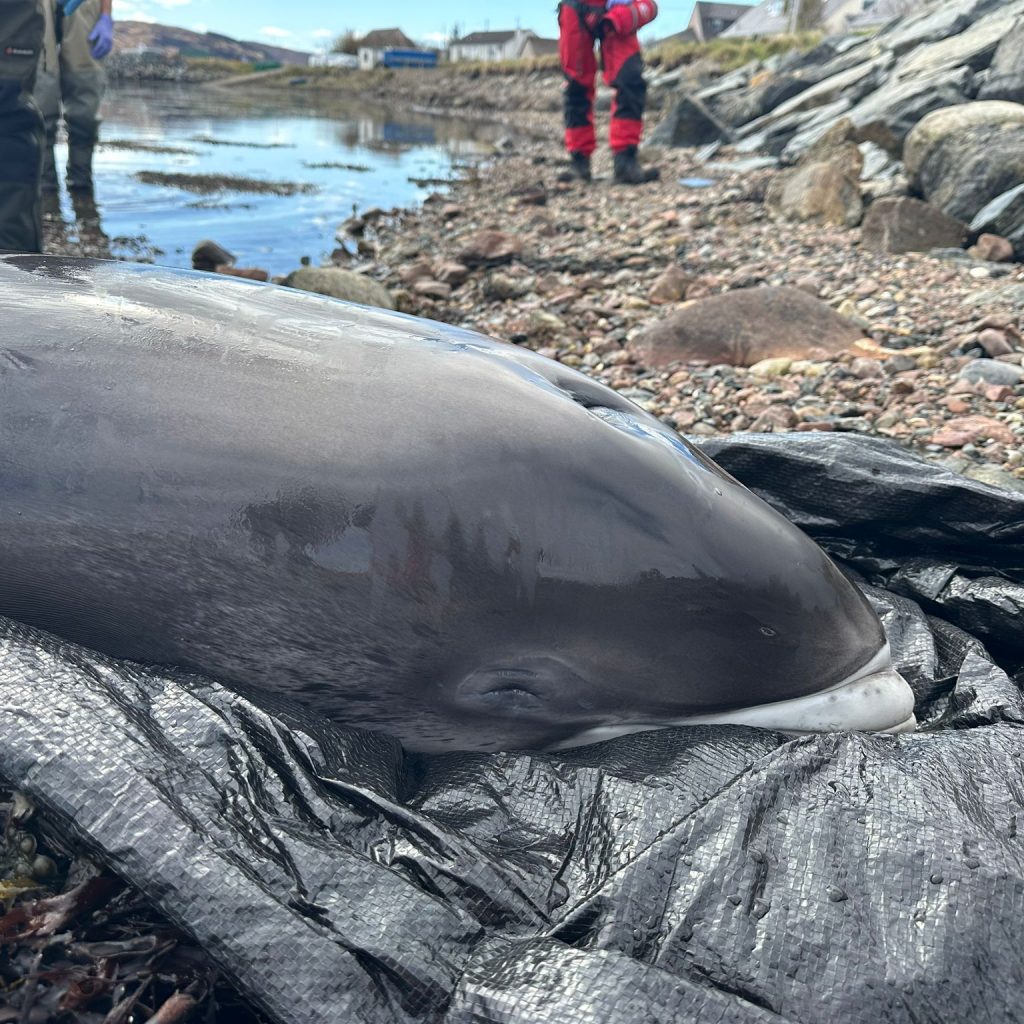
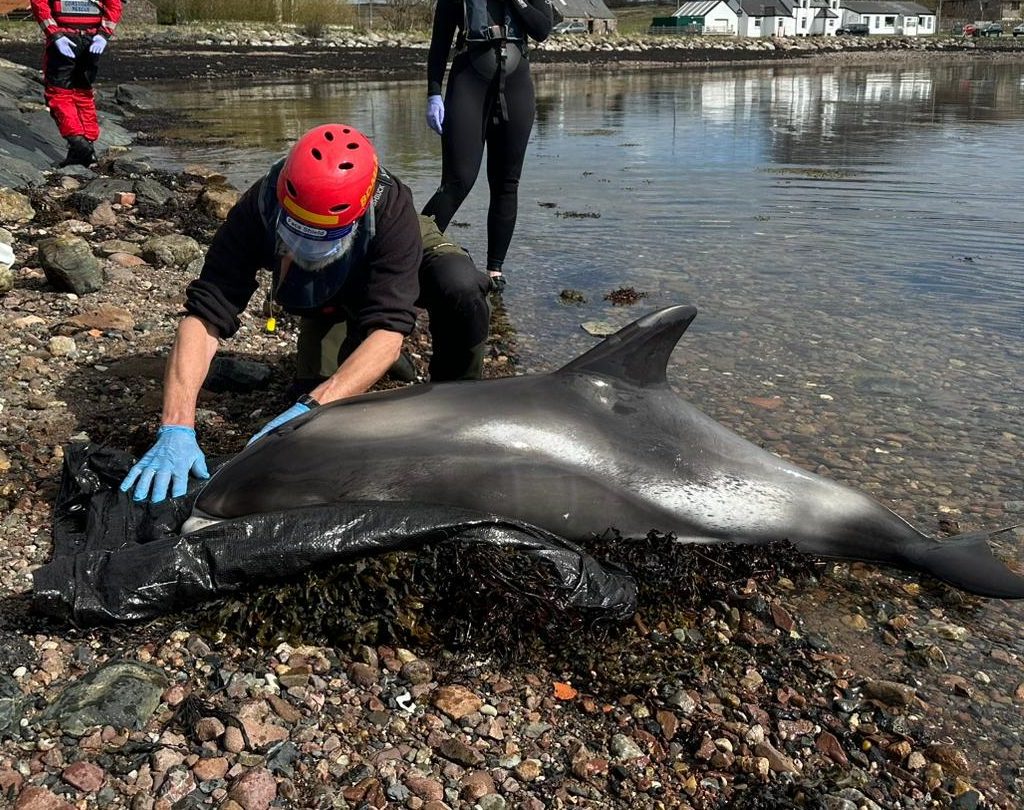
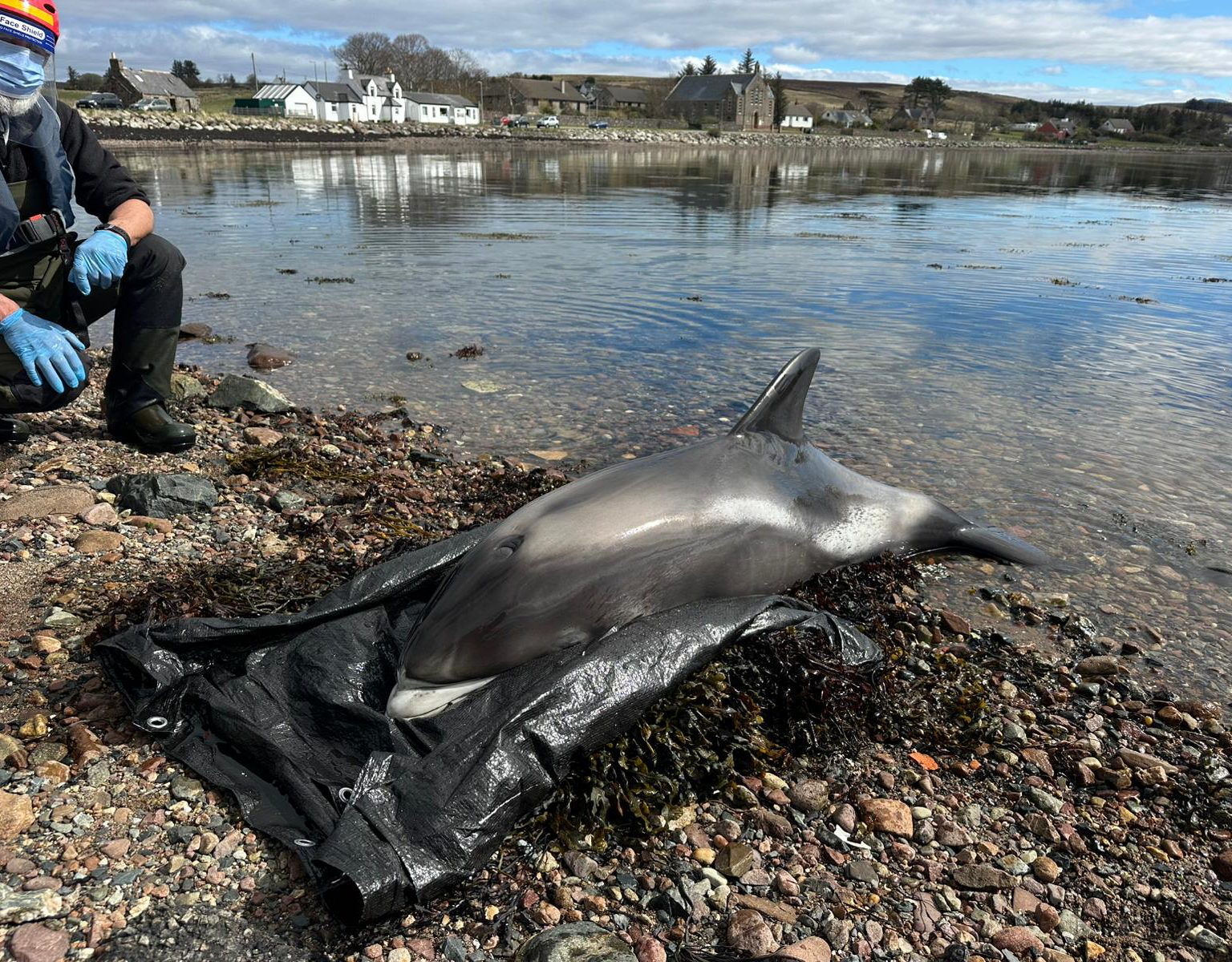
Marine Mammal Medics were alerted and attended the scene with specialist rescue equipment, to find a small white-beaked dolphin, a stocky species of pelagic dolphin, frequently seen in Scottish waters.
The dolphin was observed struggling in shallow water, circling on its side and repeatedly attempting to strand. Medics supported the animal upright to reduce the risk of drowning, and with HM Coastguard in attendance for support and safety cover, brought the dolphin ashore to allow a full welfare assessment.
It may seem natural to keep a dolphin in water, however cetaceans are air-breathing mammals and consciously surface to breathe through their blowhole. Disorientated stranding cetaceans can be at risk of drowning, even in shallow water. Supporting them on the shore allows our trained Medics and veterinary teams to carry out assessments.
The young dolphin was identified as an underweight juvenile male and likely still maternally dependent, with clinical signs showing underlying illness. This included purulent discharge from the blowhole and erratic behaviour, both commonly associated with conditions such as pneumonia. Given the animals age and overall condition, the prognosis for survival was extremely poor. Following veterinary consultation, the decision was made that euthanasia was the most ethical decision to prevent further suffering.
The dolphin was later transferred to the Scottish Marine Animal Stranding Scene (SMASS) where a post-mortem examination will help determine the cause of stranding and understand the animals history.
This incident highlights the importance of reporting marine mammals in distress promptly and avoiding attempts to refloat or return them to the water. Well-intentioned intervention without appropriate training can increase stress, delay effective care, reduce the chance of successful refloat attempts, and pose risks to both people and wildlife.
If you encounter a marine mammal in distress, please contact BDMLR’s 24 hour hotline on 01825 765546 to provide as much information as possible, including location details (What3Words particularly helpful) and photographs taken from a safe distance.
Photos by Matt Larsden-Daw