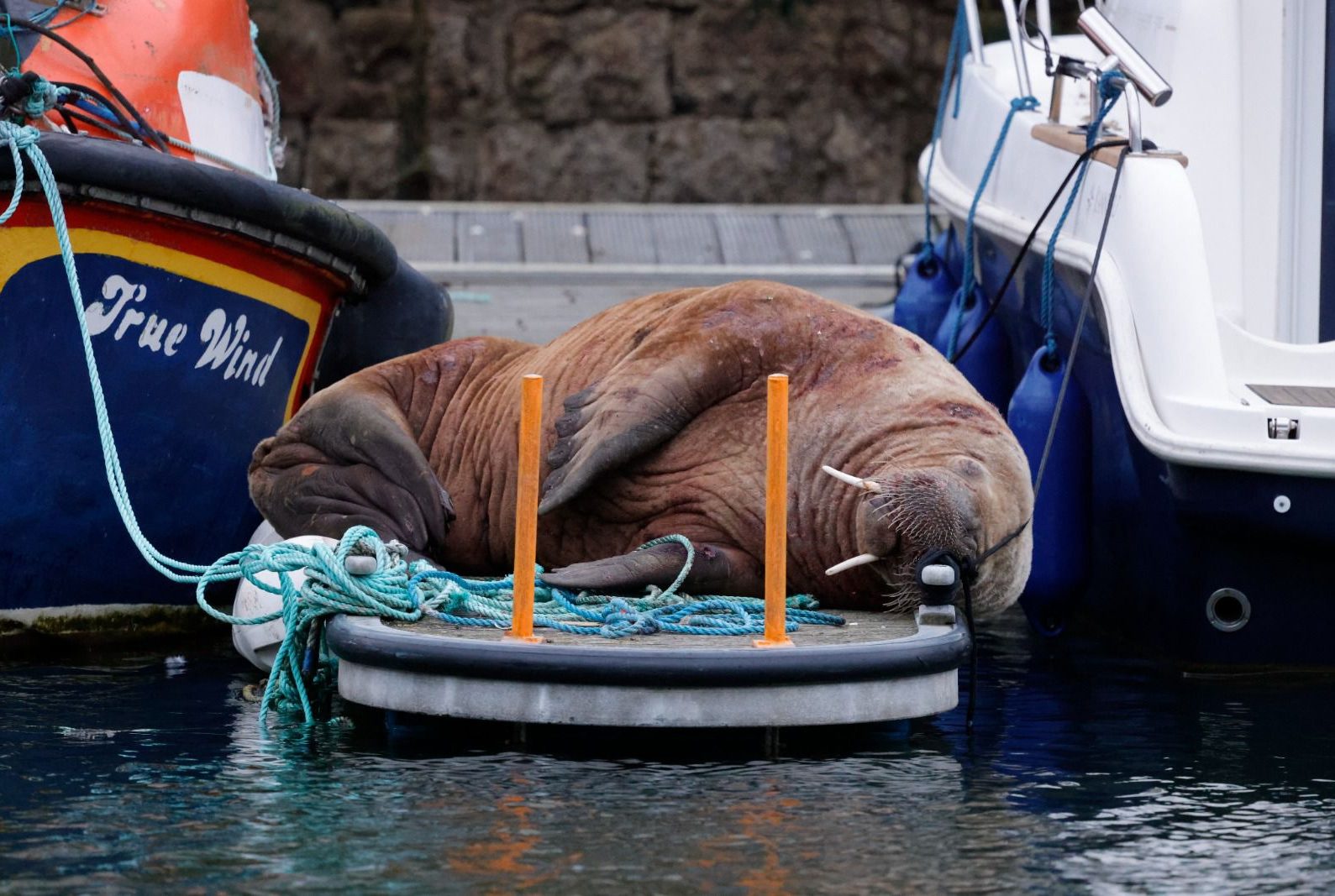
The walrus nicknamed ‘Magnus’ originally seen in Orkney has since been hauling out at a number of different sites including harbours along the north east Scottish coastline. As with previous Arctic visitors, this is likely a young animal travelling in unfamiliar waters. Walruses are occasional visitors to UK shores, with sightings increasing in recent years – thought to be linked to the loss of sea ice habitats in the Arctic.
There has been significant public interest in following this animal as he turns up in very public locations, with many people able to come down to catch a sighting and chat to our volunteer team. Encouragingly, the vast majority have been respectful towards him and keen to learn more about walruses, their natural behaviours and threats like climate change, including a visit from a lucky local school group! This has provided a valuable opportunity to engage with the public and share important information about marine wildlife and conservation during his harbourside visits.
British Divers Marine Life Rescue are working closely with Police Scotland Wildlife Crime Team, local Policing teams and NatureScot to help monitor the situation as and when he turns up, to minimise and manage disturbance occurrences.
Walruses depend on long, uninterrupted periods of rest to recover energy reserves. Repeated disturbance, whether from people approaching too closely, noise, drones etc can cause stress or force him to relocate. This uses up valuable energy, potentially impacting their ability to continue travelling, feed effectively, and ultimately survive.
Especially when in busy public areas, his presence will understandably become common knowledge very quickly, leading to increased numbers of people visiting the site and potentially escalating the risk of disturbance incidents happening. Sightings can be reported directly to British Divers Marine Life Rescue via our hotline or to Police Scotland via 101. This allows trained responders to assess the situation appropriately, monitor the animal’s condition, and ensure coordinated, welfare-led management.
We hugely appreciate the great support we have had so far from communities and visitors to help by giving him the space he needs to rest, recover energy and continue his journey when ready. If he is spotted in a remote location then we recommend not posting his whereabouts immediately to help keep him safe too, as these can sometimes be harder to get to and for managing disturbance risks and incidents.
Walruses are protected by law from disturbance (Section 9 of the Wildlife and Countryside Act 1981), and the same guidance for respectful watching applies as with seals. People should:
If disturbance is witnessed, it should be reported to Police Scotland via 999 (ongoing incidents) or 101 (non-urgent).
Thank you again to everyone who has helped look out for and respect Magnus during his continuing excursion!
Photos by Cath Bain/BDMLR