On 15 February 1996, the oil tanker Sea Empress ran aground at the entrance to the waterway in Milford Haven, Pembrokeshire, Wales. Carrying around 130,000 tonnes of crude oil, what followed became one of the most significant marine pollution incidents in UK waters.
The tanker missed her tug escort by only minutes, instead colliding with rocks near St Ann’s Head. Around 72,000 tonnes of crude oil entered the surrounding waters, along with several hundred tonnes of fuel oil. As the oil began to wash ashore over the following week, approximately 200km of coastline became contaminated. More than 17km of oil booms were deployed in efforts to contain and recover the spill, but harsh weather conditions and continued movement of the vessel led to ongoing leakage and heightened risks; including fears of explosion.
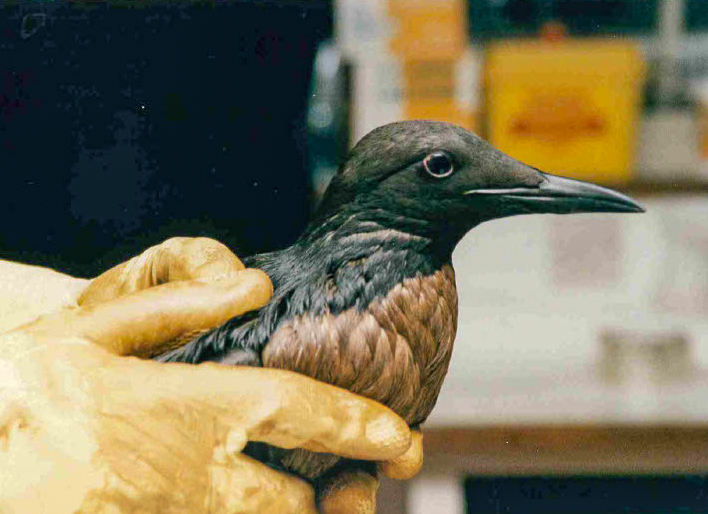
Oil driven ashore by strong winds brought devastating consequences for wildlife. Thousands of seabirds returning early to the cliffs to breed – including scoters, guillemots, gannets, gulls and divers — were found coated in oil, with an estimated further 2,500 recovered deceased over the first week alone. A small number of seals were also reported to have been affected. Efforts to stabilise the tanker proved largely unsuccessful. However, persistent heavy winds did push a significant proportion of the oil slick away from some of the waters around Skomer, an area internationally recognised for its seabird colonies and natural beauty.
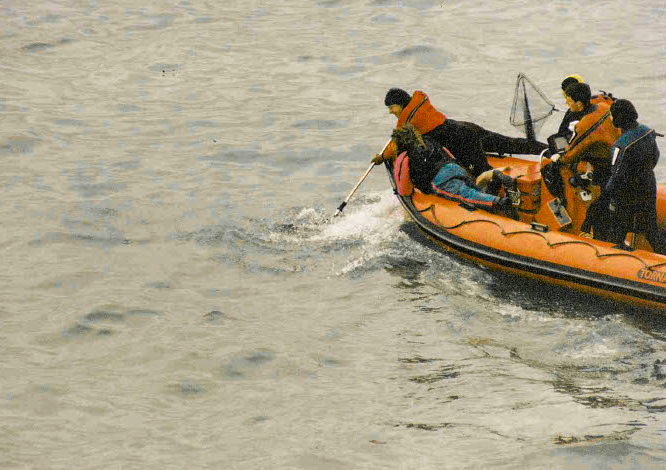
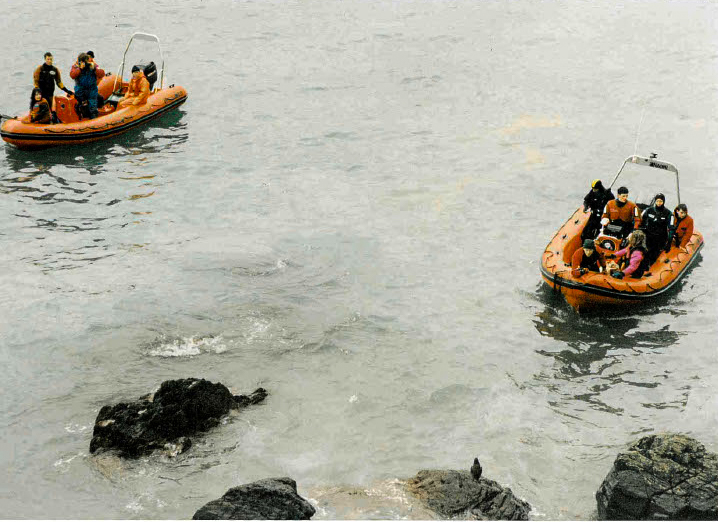
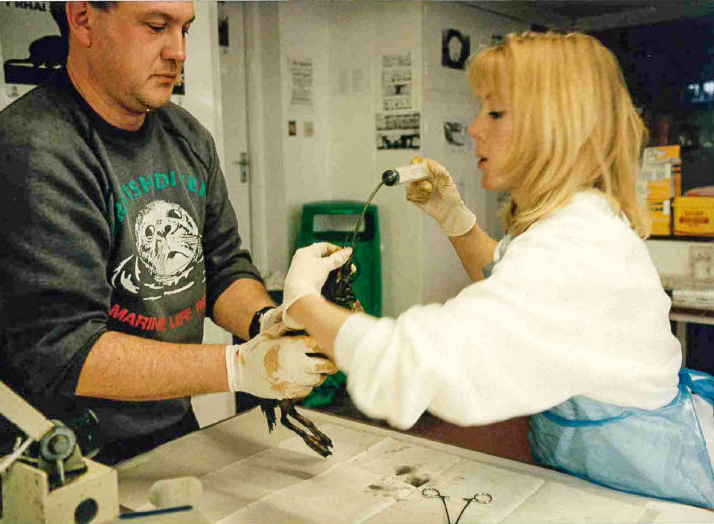
British Divers Marine Life Rescue established a temporary bird triage unit at Dale Fort, playing a key role in the frontline response to the incident. Using our boats, Medics located and captured affected birds at sea, as well as from inaccessible beaches and rocks where many had become stranded and were no longer able to fly. Volunteers were exhausted, working up to 18 hours a day stabilising the birds late into the night.
“The sea conditions were appalling. Sometimes the RIBs were dumped stern first. And we would lose sight of one another as we rode up and down the waves searching for oiled birds”
Once stabilised at Dale Fort, the birds were transported to a washing facility established by the RSPCA and partner agencies, where contamination could be carefully removed from the many animals requiring urgent assistance. Public support for the response was immense, with donations of towels and washing-up liquid helping volunteers work tirelessly to clean oil from affected wildlife. Along the impacted coastline, members of the public also assisted with beach clean-up efforts and the recovery of deceased seabirds.
“In those days, PPE wasn’t what it is now – if the oil got on your skin you could feel it burn instantly, especially if it got in your eyes. Everything we ate, drank or smelled the whole week was accompanied by a strong smell of crude oil. Including my best sweatshirt!” – Mark Stevens
Multiple organisations worked endlessly for several weeks using suction tankers, pressure washers and oil-absorbing scrubbers to remove oil from the coastline. The cost of the clean-up was estimated to be around £60 million; however, when the wider economic and environmental impacts understood at the time were included, this rose to approximately £120 million (equivalent to around £244 million today).
Oil spills are not just a moment in time — they can leave long-lasting impacts. Even after visible slicks disperse and beaches are cleaned, knock-on effects may include habitat disruption, food-chain impacts, and increased pressure on already vulnerable wildlife.
For BDMLR, incidents such as the Sea Empress highlight why rapid reporting, coordinated response, and long-term stewardship of our seas matter. When marine wildlife is harmed — whether by pollution, entanglement, disturbance or disease — our trained Marine Mammal Medics and partner organisations provide a vital safety net.
In the aftermath of the spill, clearer roles between responding agencies were established, alongside strengthened regulations such as the Ports & Marine Facilities Safety Code. Emergency planning, pollution response procedures, and multi-agency coordination were also enhanced, helping to improve the management of future maritime incidents and reduce environmental risk to coastal habitats and wildlife.
If you would like to support BDMLR’s ongoing work responding to marine mammal emergencies around the UK, please consider donating today. Every report, every trained Medic, and every piece of kit helps us be there when it counts. Donate here via JustGiving
With thanks to the People’sCollection – Wales