Exploring the environmental and safety challenges faced on the islands
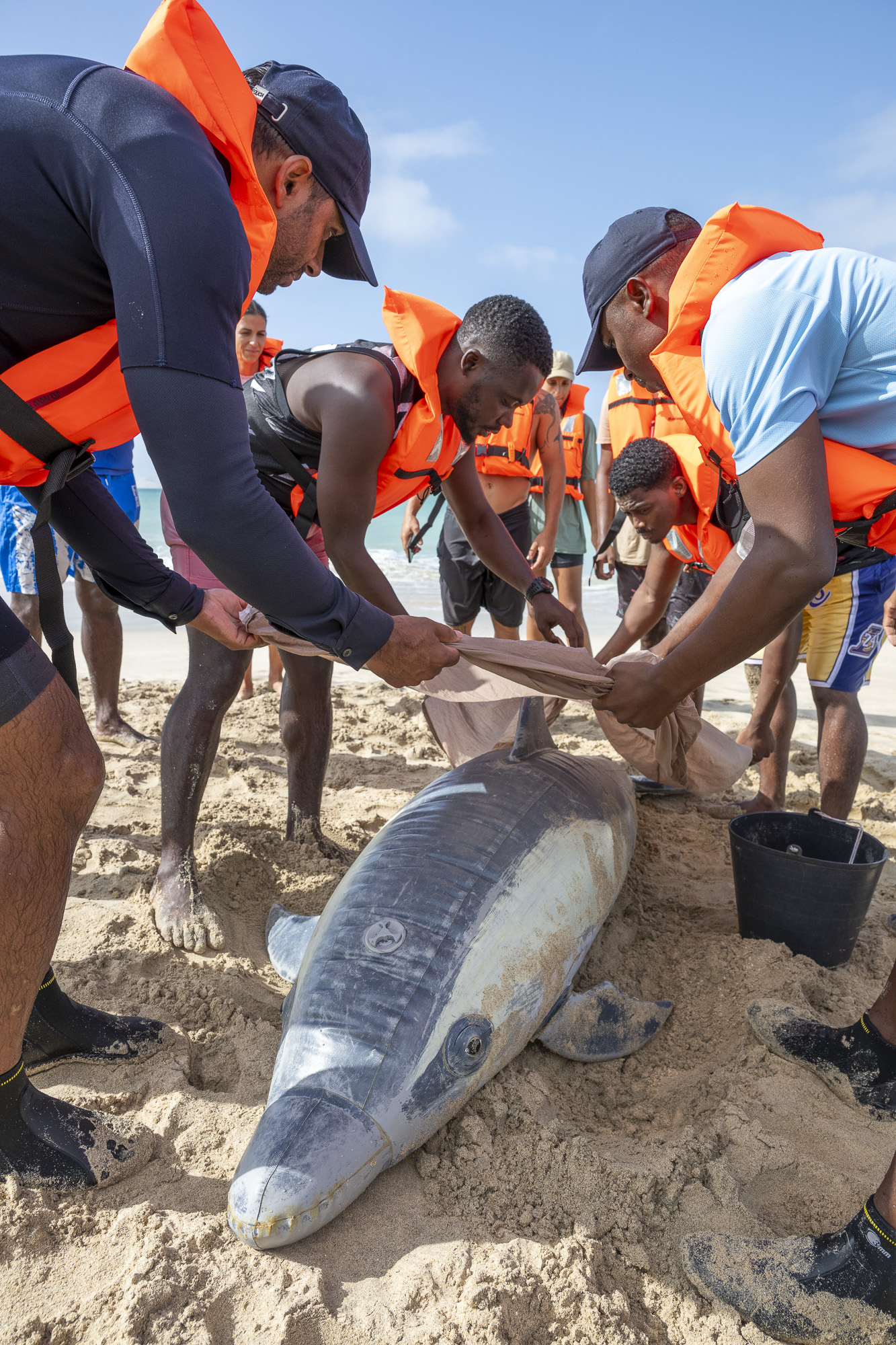
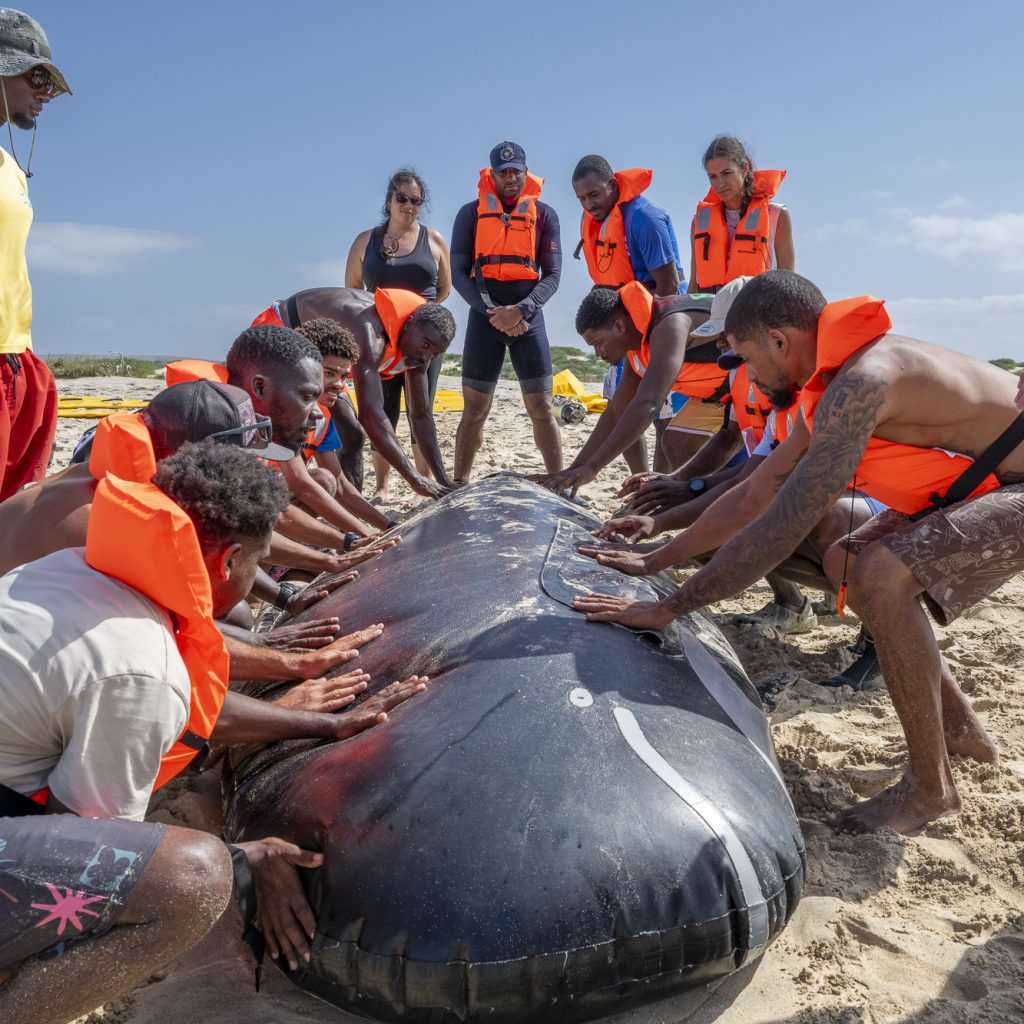
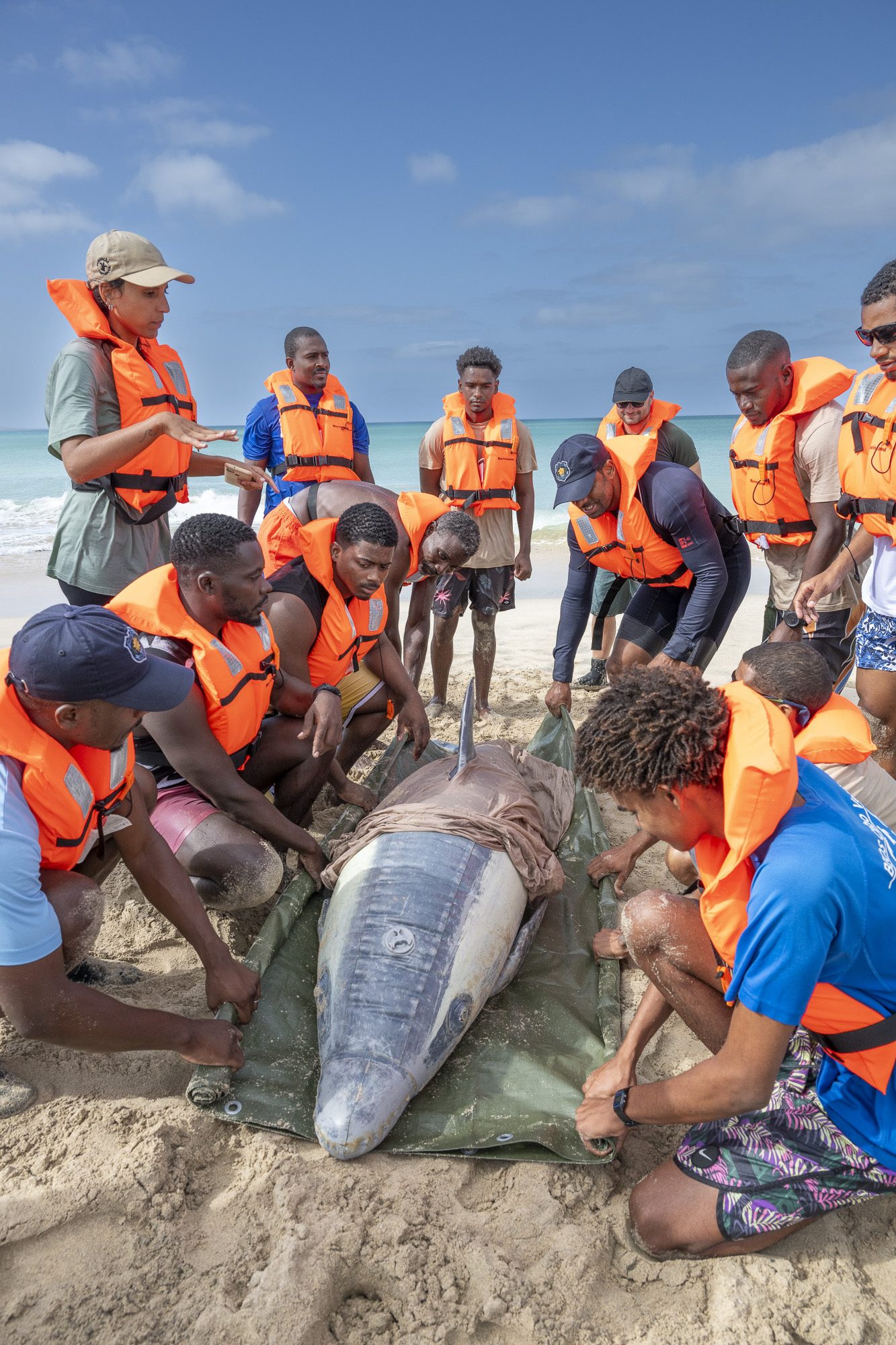
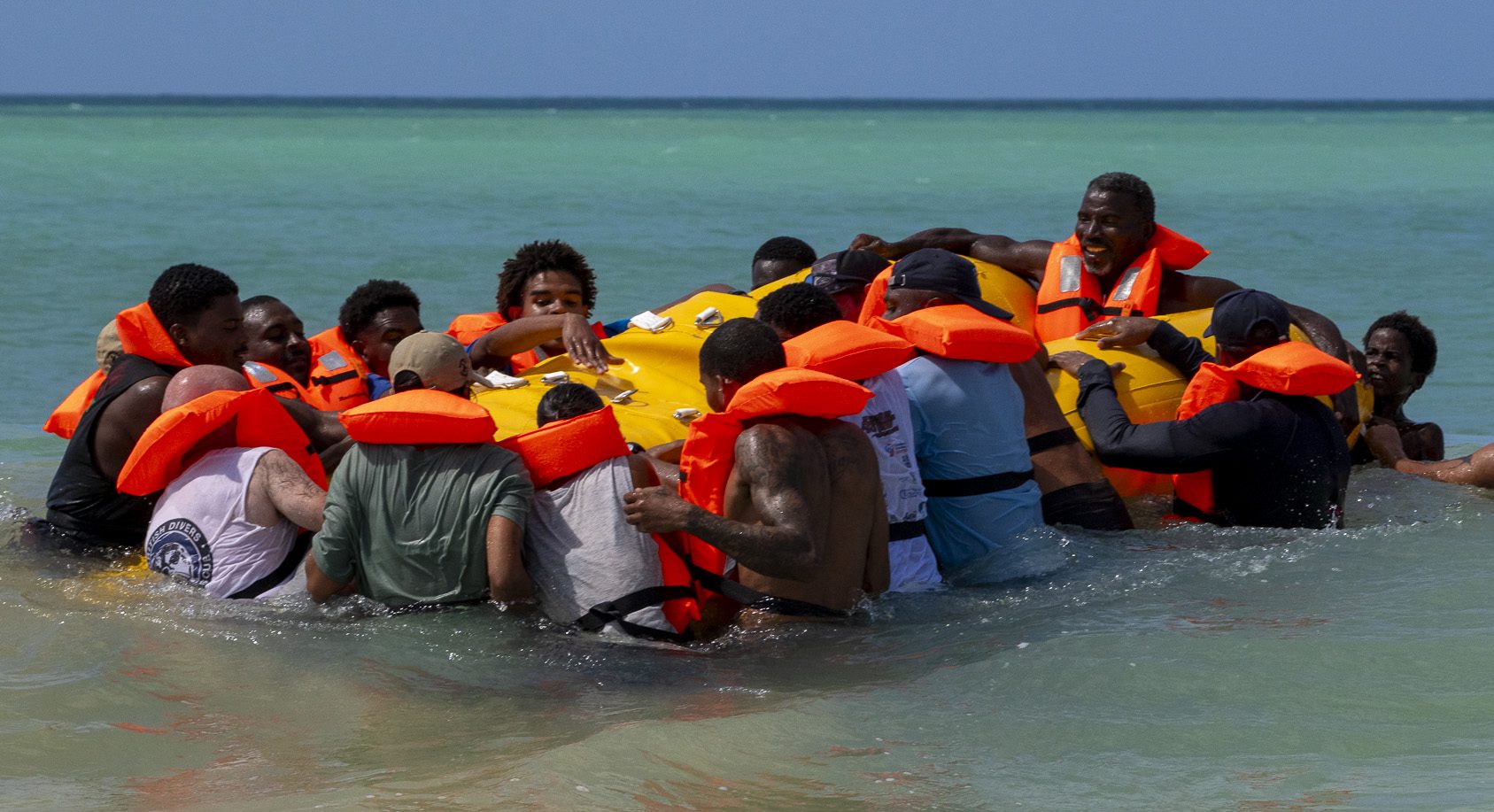
Recently, while delivering cetacean stranding response training across two islands in Cape Verde to almost 80 participants over four sessions, our instructors Dan and Boonie also worked closely with local teams to discuss the unique challenges responders face in this environment.
Extreme heat poses significant welfare concerns for both animals and people. Shade, hydration, safe working periods and rapid response become even more important in these conditions when attending distressed cetaceans. With mass strandings tending to occur during summer, our instructors also discussed the value of strategic refresher training throughout the year – particularly in May/June, just ahead of their seasonal peak.
Another challenge is shark presence near stranding sites. Blood in the water can attract large sharks, including tiger sharks reportedly reaching 3 metres just offshore. This adds an additional layer of risk for responders entering or working near the water. Safety protocols, site assessment and situational awareness formed an important part of the discussions, alongside wider health and safety considerations.
These insights will help shape ongoing training and preparedness across the islands, supporting responders to work effectively – and safely – during high-risk incidents.
A huge thank you to everyone involved in organising this packed schedule — especially Sara, Rui, Harrison, Kate, Abdul and Alberto, for their support, coordination and expertise in making this collaboration possible. We’re incredibly proud to have been part of this initiative and delighted to support Cabo Verde’s growing response network. It has been a privilege to work alongside such dedicated teams, and we look forward to continuing this collaboration in the future.