As we mark 20 years since the Thames Whale, we look back at what happened and what it continues to teach us about marine mammal rescue, coordinated response, and the reality that the kindest option is not always the outcome people hope for.
Late on 19 January 2006, two pilot whales were reported as swimming up the Thames. Better observation later identified the animal as a northern bottlenose whale – a deep-diving species usually found in colder, offshore waters, and not the busy tidal river through a capital city.
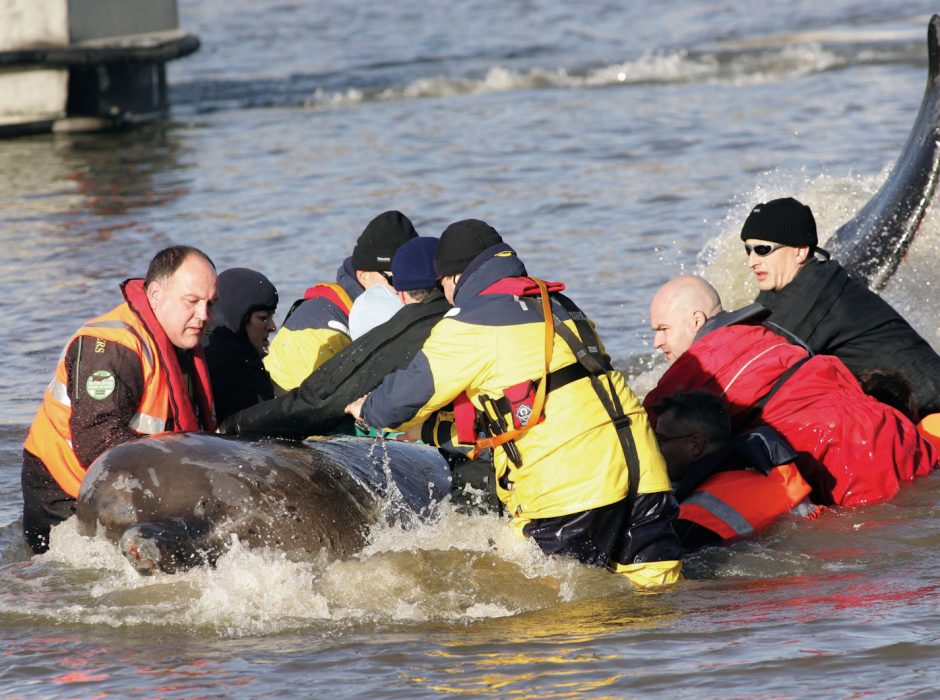
Throughout Friday 20 January, it became increasingly clear the whale was in difficulty, with repeated stranding attempts along the riverbanks near Battersea and members of the public entering the water in attempts to drive her back out. As a multi-agency response developed rapidly, teams continuously monitored the whale’s behaviour and condition while considering the safest possible intervention. Concerns grew around the incoming flood tide and the risk of the whale becoming stranded, as speculation mounted over how and why she had managed to travel so far upriver.
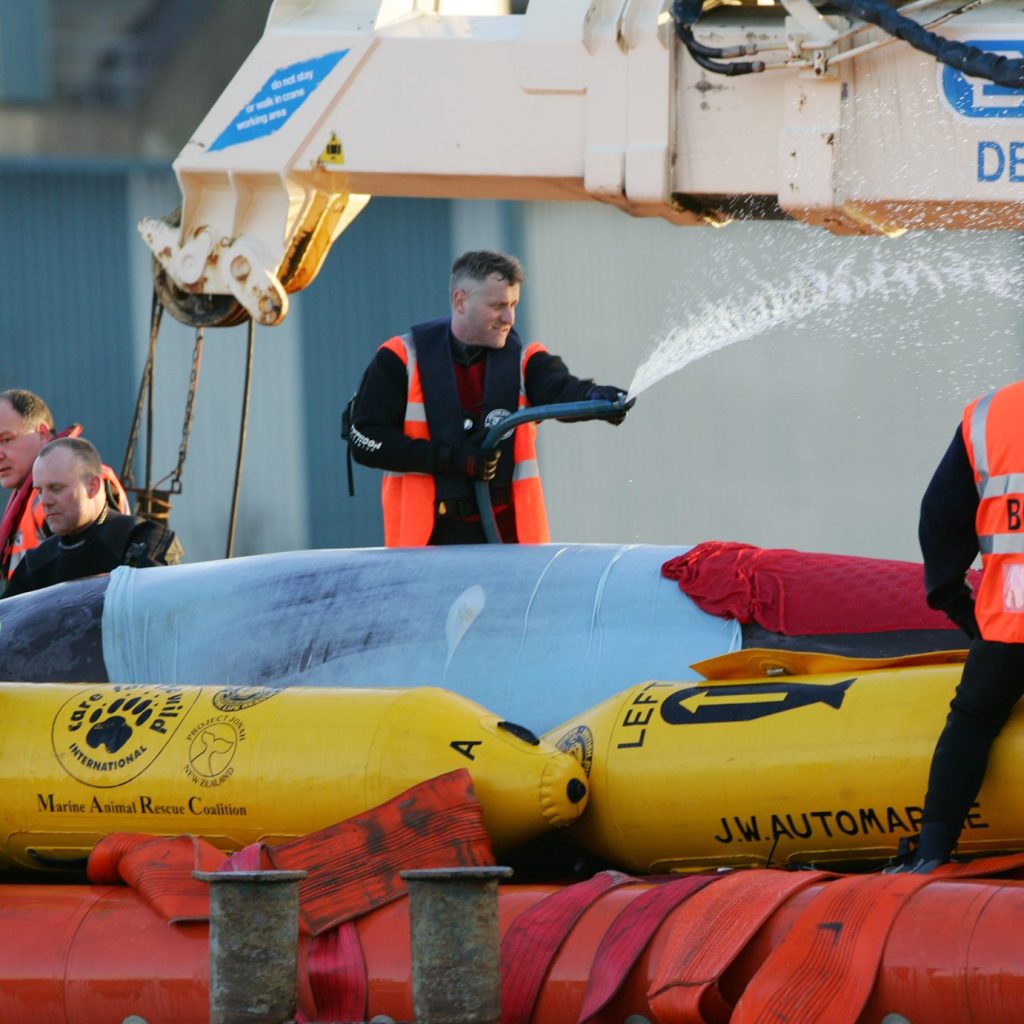
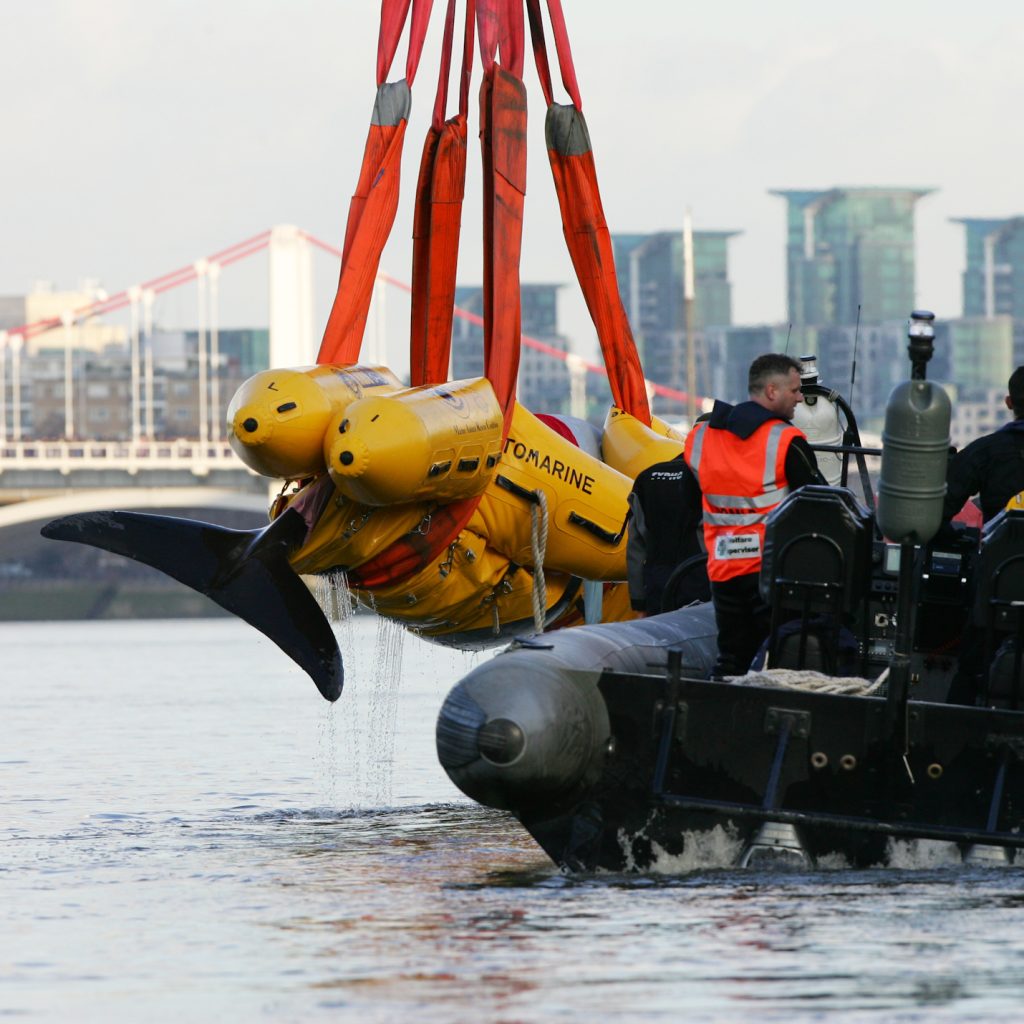
On the Saturday 21 January, the whale was secured in two sets of whale pontoons, with first aid delivered continuously by Marine Mammal Medics and the Port of London Authority, supported by veterinary expertise from the Cetacean Strandings Investigation Programme team. Throughout the operation, the whale was kept as stable as possible while responders monitored her breathing, behaviour and overall condition, working against the pressure of tides, time and the challenging environment.
A plan was formulated to transition the whale out of the Thames by barge, allowing continuous support while she rested within the supportive pontoon system. This approach aimed to reduce further exhaustion and physical strain, while enabling responders to conduct a full veterinary assessment and provide ongoing welfare support during transport.
As the incident unfolded, it drew immense public attention — with over 50 million people reported to have watched live on TV, and thousands of onlookers, news crews, boats and helicopters surrounding the scene from every possible viewpoint. Despite the expertise on site and the careful intervention, the whale’s condition deteriorated rapidly. With her welfare declining and her prognosis worsening, the whale sadly died as euthanasia was being prepared.
When a whale enters an unsuitable environment or strands, their body can begin to suffer almost immediately. Even when an animal is still swimming, they may already be in a state of extreme physiological stress which can lead to complications that are irreversible. She gained the title of the world’s most studied whale at the time, with post-mortem findings reported that she died from a combination of serious factors including:
Following her death, the Thames Whale continued to shape marine mammal research long after the incident closed. Her skeleton was preserved by the Natural History Museum, entering her into their collection as a rare and scientifically valuable specimen.
She was identified as a 5.85m long juvenile female, under 11 years of age. Her remains have provided an important reference for ongoing studies in to cetacean biology, strandings and the species itself. Ensuring that even in death, she contributed to greater understanding and improved welfare for future mammals.
The incident marked an important moment for marine mammal welfare in the UK.
Following extensive studies, we learned that when northern bottlenose whales are stranding in this particular type of situation on the North Sea coast, they are typically in such poor condition. Exceptional muscle damage can occur from strandings and compressing their organs results in myoglobin build up within the tissues, which leads to renal failure. Recognising the impact these conditions have within marine mammals – we developed a large whale strandings welfare triage policy based on the scientific research learned from her stranding, formalising welfare science best practices.
Subsequent cetacean strandings of similar species in this geographic region have confirmed the same results, and these findings have strengthened triage and assessments for future animals. The stranding also led to greater public awareness of the importance of prompt reporting rather than intervention, understanding there are risks to strandings especially of this nature.
The incident also strengthened multi-agency coordination and protocols for cetacean strandings, shaping evidence-led approaches resulting in improved welfare for the animal — the ripple effects of which are still felt today with lasting relationships with emergency services and authorities.
For many people globally – not just London – the Thames Whale was their first experience of large-scale wildlife response, and that compassion sometimes looks like a difficult decision. It changed public understanding of why organisations like BDMLR exist. BDMLR had already been rescuing marine mammals for 18 years at this point, operating as a welfare-led rescue charity, responding night and day to stranded seals, whales, dolphins and porpoises across the UK.
Amid the urgency of the response and the sadness of the outcome, the incident also revealed something greater than the rescue itself: the public’s empathy. Messages of support poured in from across the UK and beyond, and people watched on in quiet hope from London’s bridges. In the days that followed, supporters raised funds for BDMLR in her honour – including the memorable auction of a signed watering can, symbolising the desire to help keep her comfortable during the rescue attempt. Even the city showed its support, with parking tickets pardoned for those responding.
Perhaps most powerfully of all, it left everyone with something that still matters today:
A shared memory – and a responsibility.
The public remains our eyes and ears on the coastline. Reporting quickly, keeping distance, and allowing trained responders to work safely is often what gives the best chance of survival to an animal.