On Sunday 18 October, British Divers Marine Life Rescue was called by concerned residents to two common dolphins swimming close to shore along the River Plym, near Saltram.
Marine Mammal Medics were sent out and monitored the pair through the day, one of which was a maternally dependent calf. Initially they appeared to display feeding behaviour and regularly returned towards deeper water in Plymouth Sound. At this stage no intervention was appropriate as the pair were mobile in open water and no overly concerning behaviour or health issues were evident.
During the morning of Monday 19 October, both dolphins were sighted again. They appeared to be swimming well at first, however the female rapidly became disoriented, circling and became stranded in the mud as the tide receded, with the calf alongside.
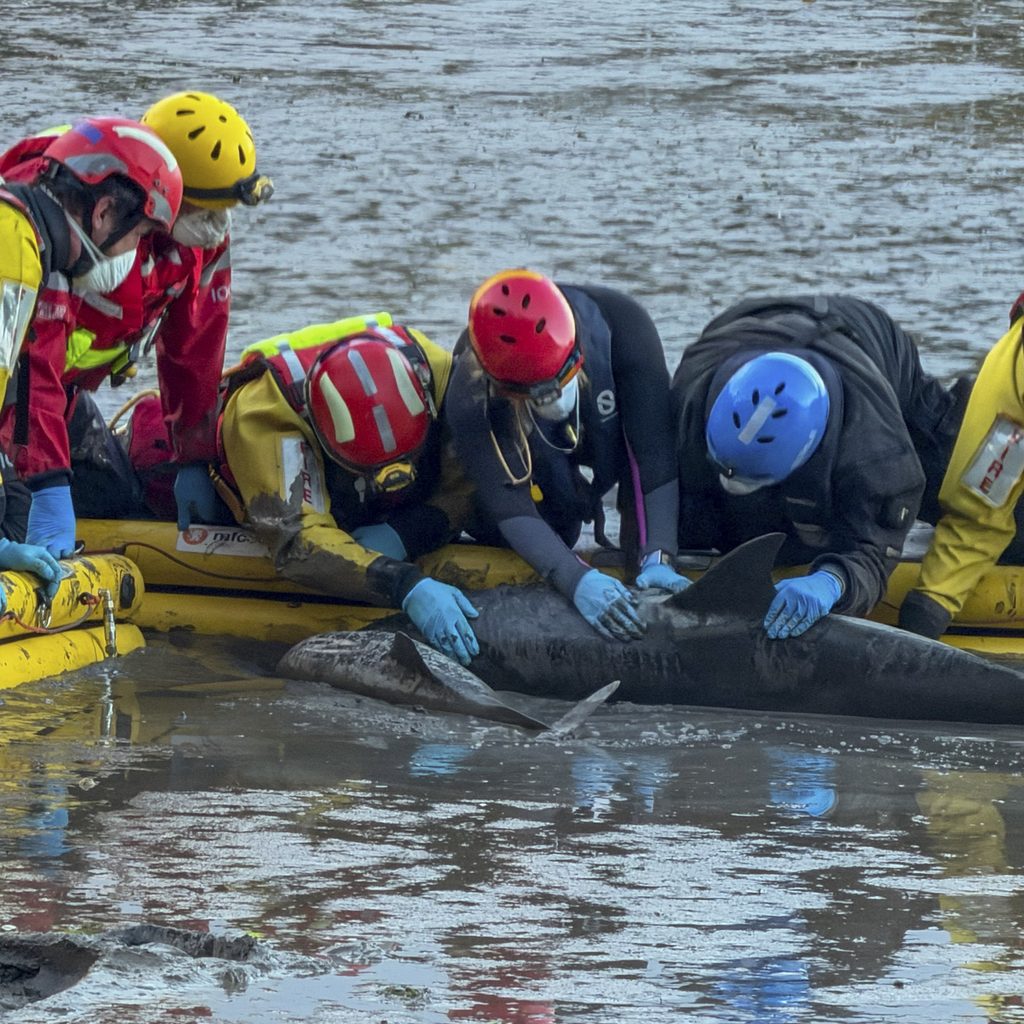
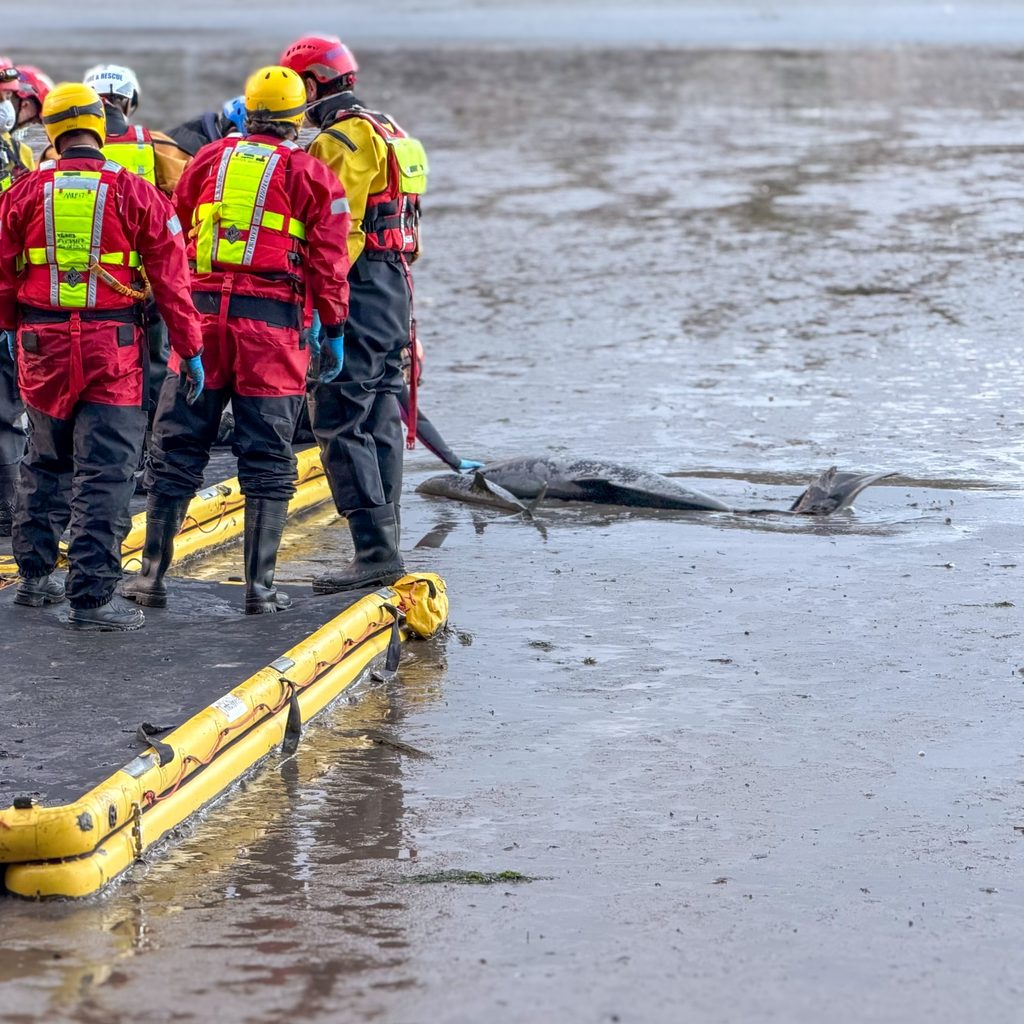
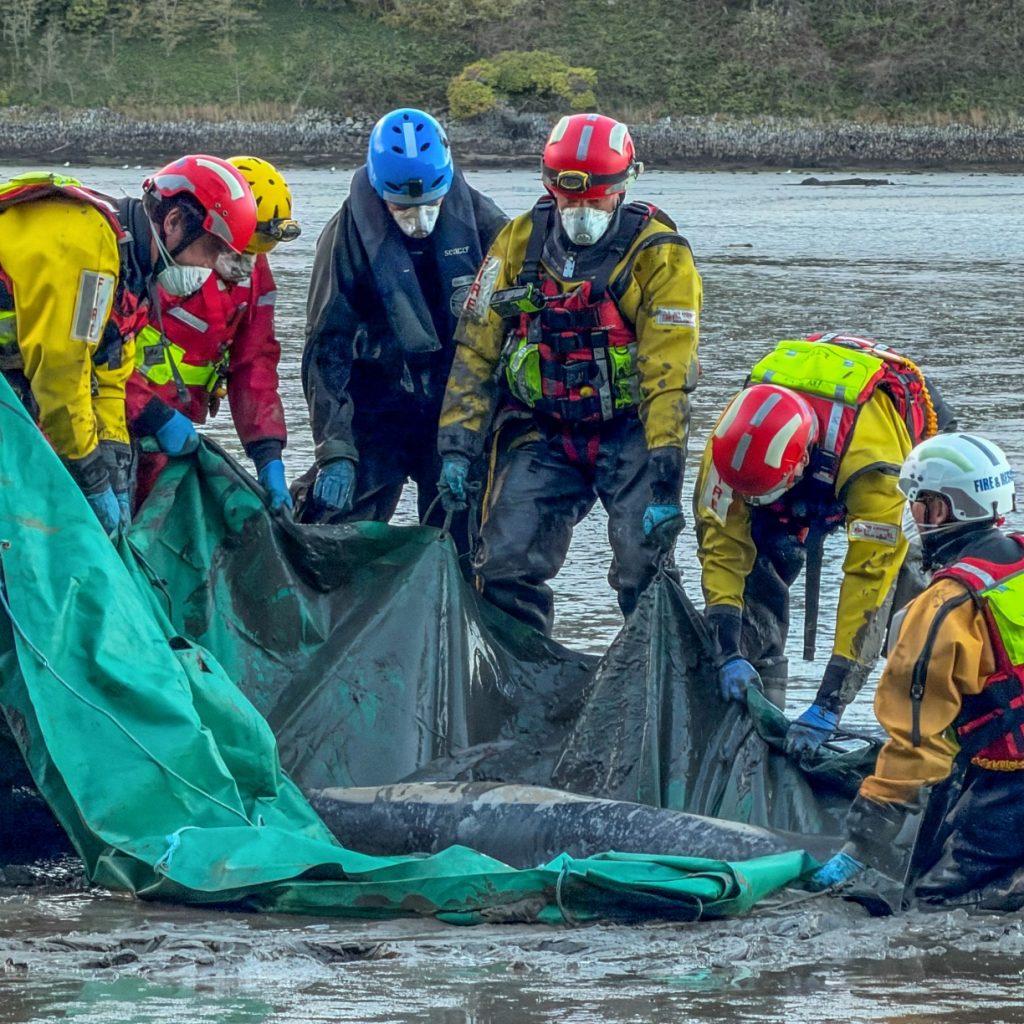
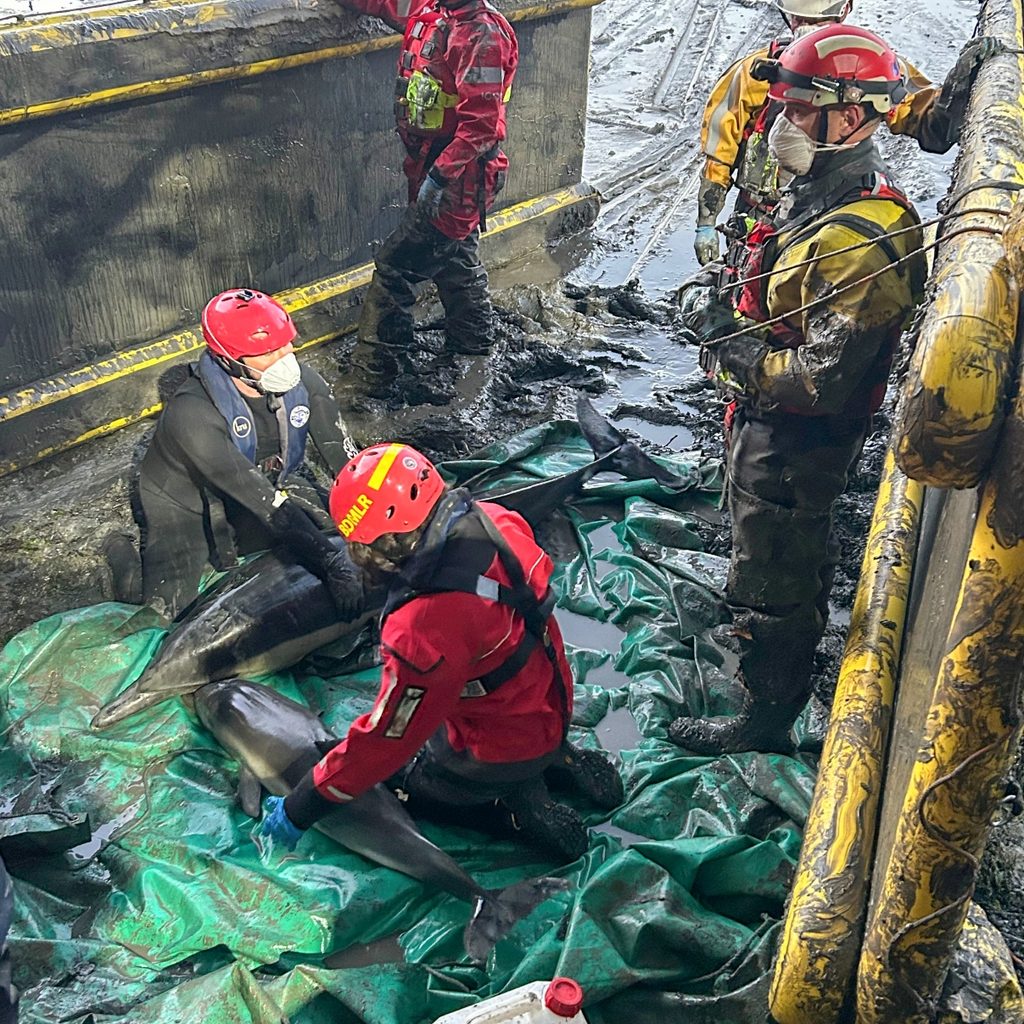
HM Coastguard and Fire and Rescue Service crews attended alongside our team of volunteer Medics, including a specialist technical rescue team to facilitate safe access as thick mud and steep riverbanks posed a significant entrapment risk to personnel trying to access them. Both were upright and able to breathe, displaying typical distress signs associated with stranding. The condition of the adult in particular rapidly declined, whilst the calf exhibited mild tremors or convulsions.
Once both dolphins were lifted out of the mud via inflatable platforms that allowed the responders to get to them, they were carried carefully on to firm land for stabilisation by our waiting Medics and a full veterinary assessment was conducted. Both the attending vet and a BDMLR consulting vet had significant concerns that the adult’s health had a poor prognosis for survival and the decision was made to euthanise her based on these facts gathered from the clinical assessment. Very sadly in these cases the maternally dependent calf will not survive alone, eventually starving to death. With this particular incident there were also signs of health problems too, and both animals have been sent for post mortem examination with our colleagues at Cornwall Marine Pathology Team, part of the national Cetacean Strandings Investigation Programme, where we can find out more about their health status and perhaps answers as to why they eventually became stranded and declined so quickly.
Decisions of this kind are never taken lightly, and response is more than simply putting an animal in the water regardless of the circumstances. Strandings are well documented in scientific literature to often be a symptom of a serious underlying problem such as illness, disease or age related conditions that they are no longer coping with. With declining physical health, returning them to the water is not a humane option as they continue to suffer a more prolonged, painful and distressing death. Sometimes healthy animals do also strand accidentally, and these are cases that we can aim to trial refloating as they often have a good prognosis.
The outcome is upsetting for all those involved, and having compassion for them when hard decisions have to be made and carried out is just as important to bear in mind alongside that of the animals in our care. We are grateful to HM Coastguard, Fire and Rescue Service, the attending vets and everyone from our team who worked tirelessly through difficult conditions for these dolphins.
Images and content may not be reproduced or used without prior written permission from BDMLR.