Today, on 21 November 2026, British Divers Marine Life Rescue (BDMLR) Marine Mammal Medics responded to reports of a stranded dolphin on the Gower Peninsula, South Wales, after social media posts prompted numerous calls to the charity from members of the public concerned for the animal’s welfare.
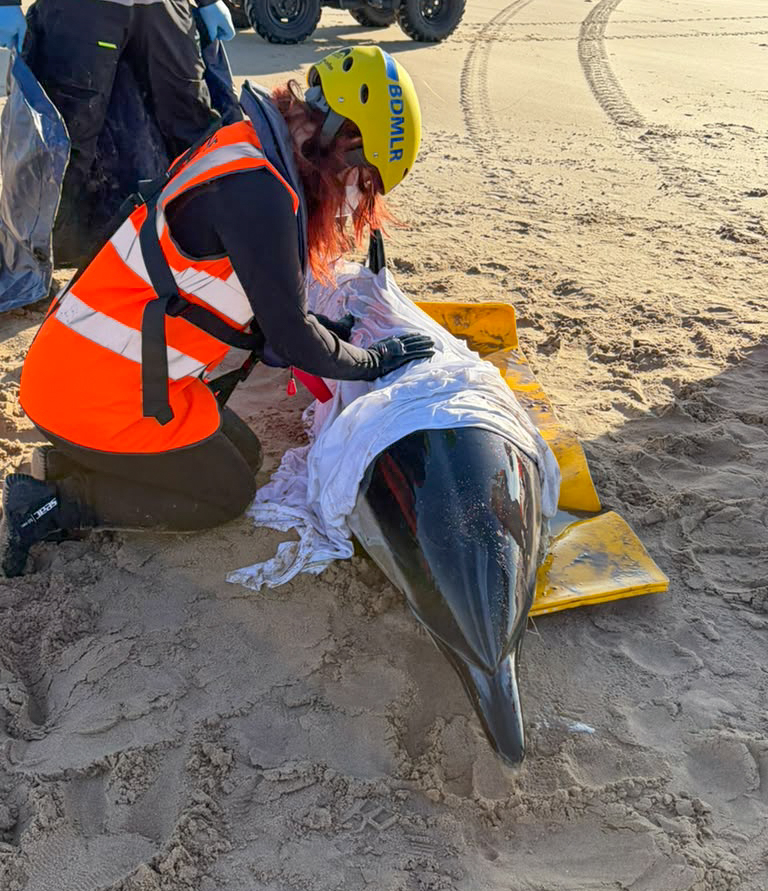
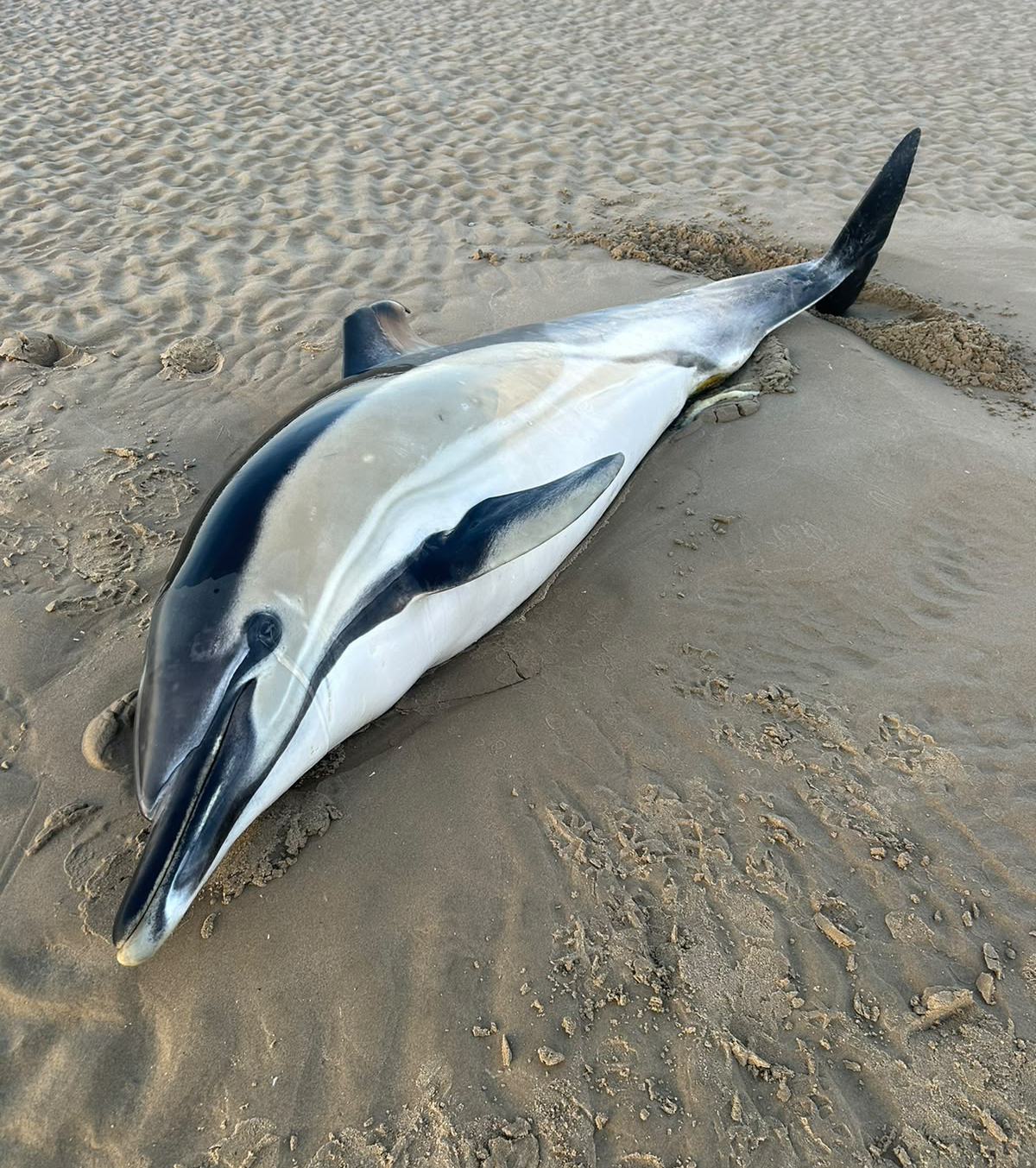
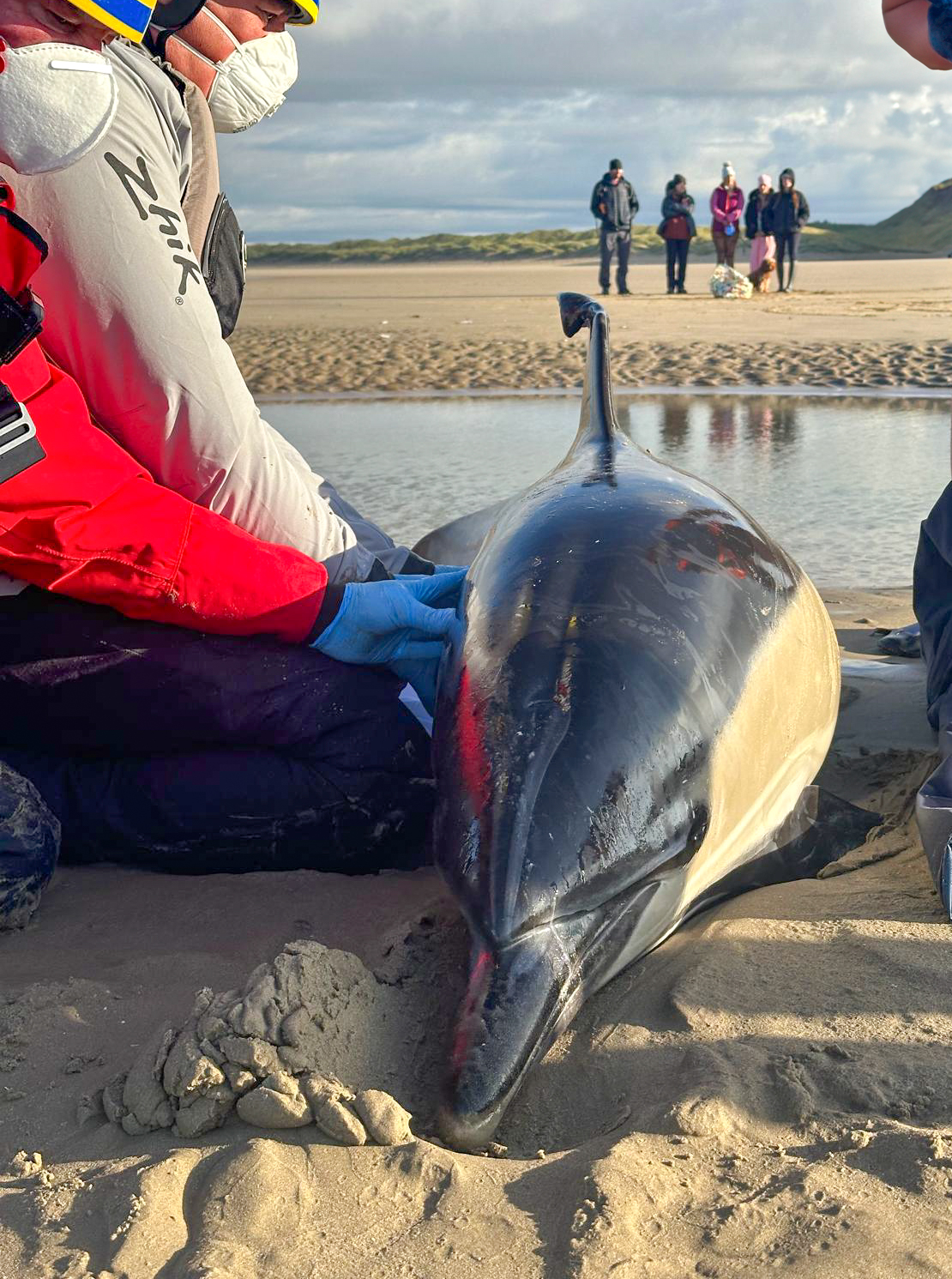
The dolphin was located in a particularly remote area, and with thanks to valuable assistance from the National Trust, Medics were able to reach the stranded animal and begin their assessment. There, they found a male common dolphin in moderate body condition, stranded on his right-hand side.
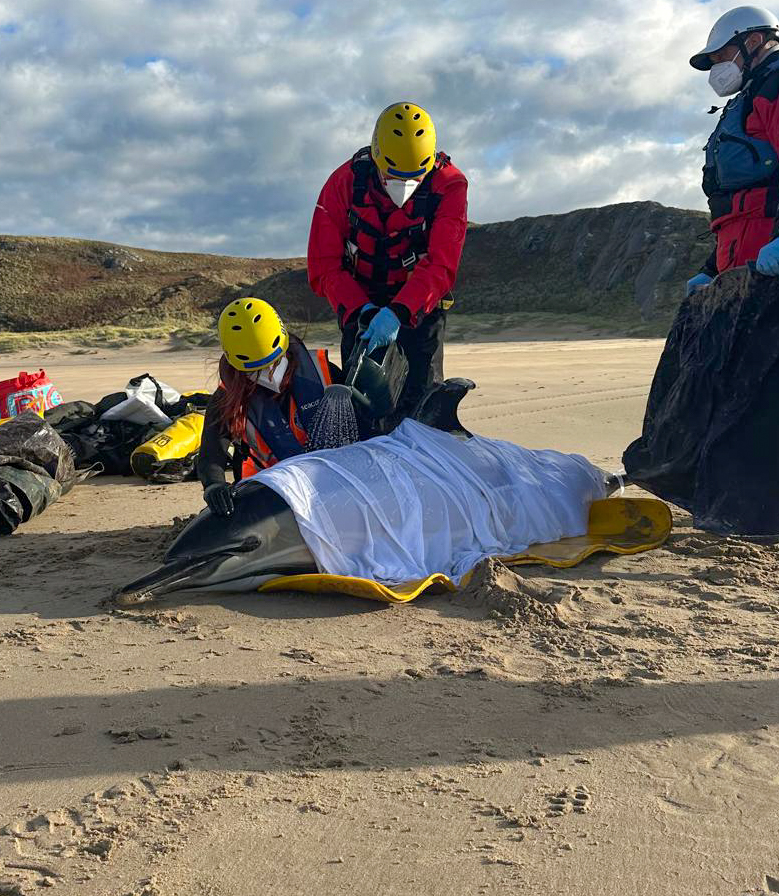
With HM Coastguard Rhossili officers in attendance to provide support, the team began administering first aid, carefully positioning the dolphin upright and keeping his eyes and skin hydrated, while sheltering him from the sun and wind. Positioning stranded cetaceans upright is particularly important, as their body weight is no longer supported by the surrounding water. Remaining on their side can place excessive pressure on their respiratory and circulatory systems, potentially leading to further complications. The dolphin’s dorsal fin appeared deformed, potentially from a previous injury; however, no other external injuries were observed and the dolphin responded well to the measures taken.
Following a veterinary assessment, the attending vet, Kevin, in consultation with BDMLR advisors, agreed on a trial refloat to assess how the dolphin might respond being returned to the water. The team of Marine Mammal Medics carefully transferred the dolphin onto a tarpaulin and supported him in the water, allowing time for him to regain his equilibrium and orientation. As the dolphin began showing encouraging signs, the team reduced their support, allowing him to support his own weight and demonstrate readiness to swim independently. Once released, the team formed a line in the water while splashing to help encourage the dolphin to swim forwards into deeper water, where he quickly disappeared from view.
BDMLR Medics have searched the surrounding coastline where possible where nothing was seen, they remain prepared to respond should further reports of a stranded cetacean be received. A successful refloat is an excellent outcome; however, it doesn’t necessarily mean that a cetacean which has stranded is out of danger. Cetaceans can strand for a variety of reasons, including illness, injury and navigational difficulties, and some may return to shore despite appearing strong when released.
BDMLR would like to extend sincere thanks to the National Trust for facilitating access to this challenging location, the attending veterinary surgeon, HM Coastguard officers for their support, our dedicated volunteer Marine Mammal Medics and the many members of the public who promptly reported the incident. Their combined efforts enabled a rapid response and gave this dolphin the best opportunity to return to his natural environment.
Anyone discovering a stranded dolphin, whale or porpoise should contact BDMLR’s 24 hour rescue hotline on 01825 765546. Please avoid attempting to return a stranded cetacean to the water without specialist guidance, as doing so can cause injury to both animal and person. Follow the advice provided by our hotline on the best actions to take while waiting for our trained teams to arrive.
© British Divers Marine Life Rescue (BDMLR). All rights reserved. Images must not be reproduced or distributed without prior written permission. Media enquiries: media@bdmlr.org.uk