Update 20/09/26 10:00:
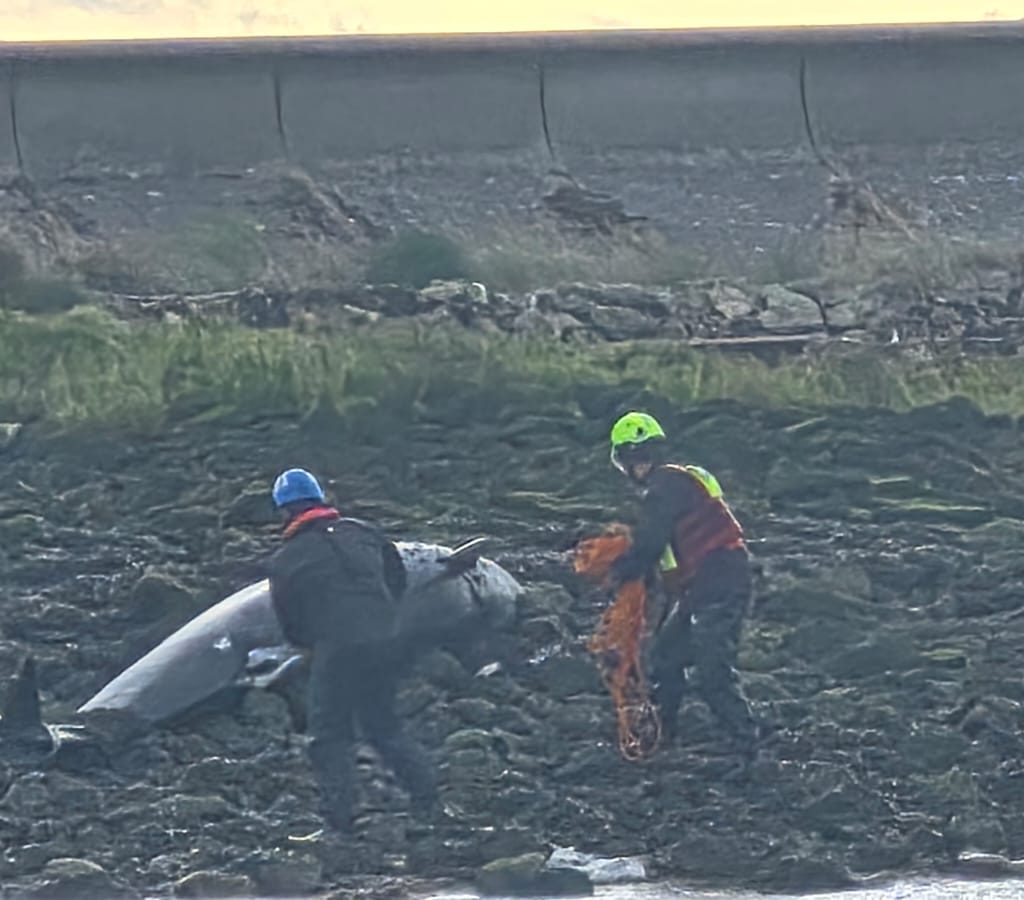
Yesterday evening the whale that separated itself during the herding effort and appeared to be in distress briefly stranded alive at Canvey Island. It was quickly washed out again before our Medics could take any action and was not resighted despite shoreline searches until dark.
On further searches early this morning in conjunction with the local Coastguard team the whale was found ashore and confirmed deceased, a female measuring 4.5m. We are liasing with our colleagues at the Cetacean Stranding Investigation Programme who are aiming to recover it for a post mortem examination. These detailed scientific examinations are very useful in providing information about the animal’s health status, genetics, nutrition and more. The information from these helps to continually build our knowledge of the species and informs the development of evidence-based live stranding response protocols for organisations around the world.
Meanwhile, searches continue today via Civil Air Support for the rest of the pod, whom we hope have continued to move out into the North Sea. If anyone does sight them please report to our hotline on 01825 765546. Our teams remain on standby to respond should they return.
Update 19/09.26 15:00:
Following a carefully co-ordinated effort which began in Gravesend at 7am this morning, the PLA and British Divers Marine Life Rescue have been working on an effort to ‘herd’ the whales out to sea. Starting in the Thames Estuary, the flotilla of boats stayed behind the pod slowly and carefully encouraging them to swim eastwards towards the North Sea.
After a 6-hour journey covering more than 20 nautical miles, the pod had reached the outer limits of the Thames Estuary, near Red Sand Towers, and were travelling towards the North Sea with ongoing monitoring assistance from Civil Air Support.
Sadly, one of the whales has shown signs of illness and became separated from the main pod. The team from the PLA and BDMLR are currently with that whale and seeing if they can help it towards the deeper waters of the Sea.
Update 19/09/26 09:00:
Last night the separated whale that was further inland and suspected to be unwell was reported in the shallows in the vicinity of East Tilbury. Kent Fire and Rescue Service, Coastguard and Port of London Authority teams attended along with BDMLR responders where they located two whales, one deceased and one alive. The live animal refloated on the incoming tide after dark and went out to deeper water where it could rejoin the rest of the pod further away. The deceased whale was a female measuring approximately 3m, which is around the length for maturity and it is possible that a debilitated member of the pod is the reason for the animals to have come into this unusual situation. The body is being recovered for a post mortem examination with our colleagues at the Cetacean Strandings Investigation Programme.
Throughout yesterday BDMLR and the PLA continued to coordinate monitoring of the pilot whale pod in the estuary, and additional rescue equipment was transferred from across south eastern and Midland regions with the assistance of Civil Air Support, to whom we are very grateful for their support. In the meantime logistical planning meetings took place to further develop a response strategy given the complex situation and difficult geography of the area. We are on the water with the PLA today and will provide further updates later.
We would like to take the opportunity to thank everyone who has supported efforts through this incident so far, from our colleagues at the PLA, RNLI, Kent Fire and Rescue Service and Coastguard as well as members of the public reporting sightings to the BDMLR hotline and providing additional helpful information to us. We kindly remind members of the public not to approach the pod via boat or aircraft including drones as this may cause additional stress to them at an already difficult time.
Update 18/09/26 19:30:
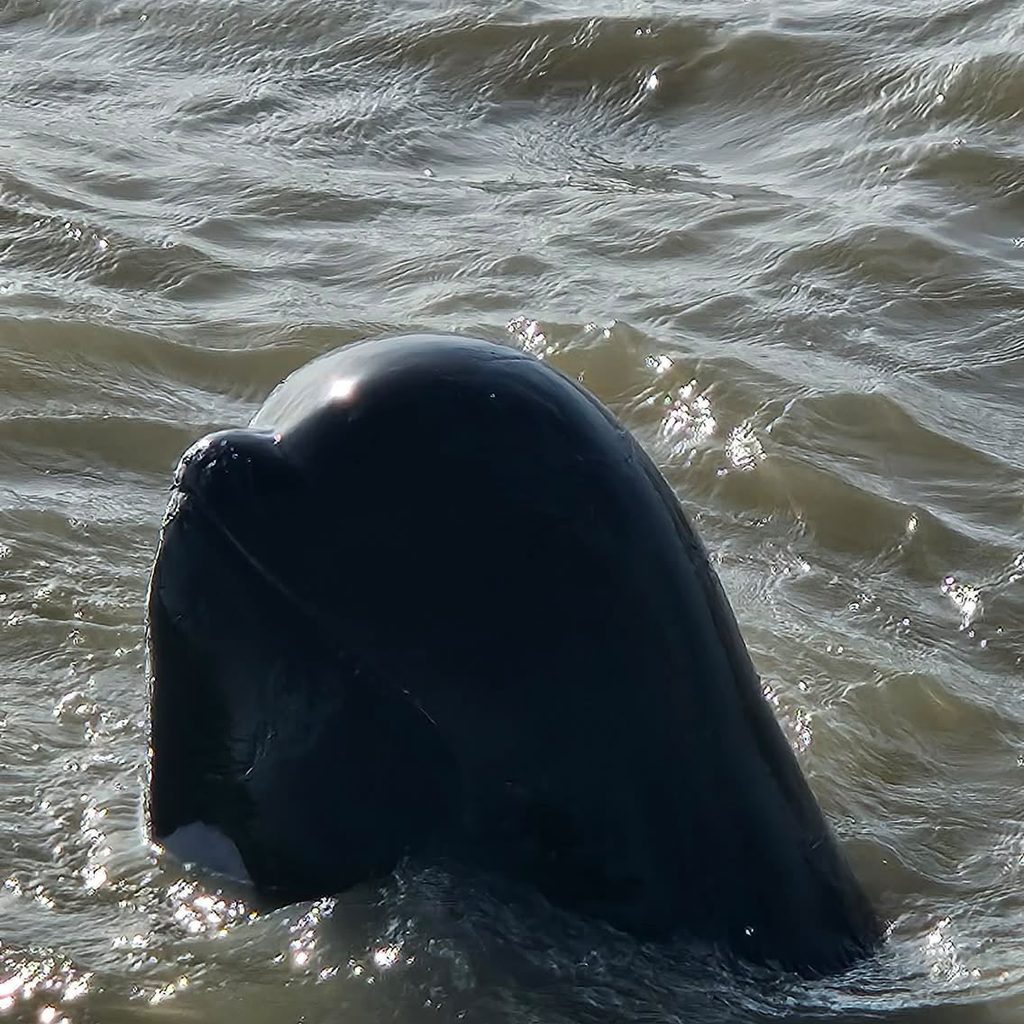
Throughout the day, along with the Port of London Authority, we have been monitoring the pod of pilot whales and they remain in the tidal Thames. One of the whales has separated from the group and is showing signs of being unwell. We will continue to work with the PLA on how to best protect the whale and hopefully encourage them back to the sea.
We encourage people to stay away from the whales to avoid added distress or risk to them.
Original article 17/09/26:
On 17 September 2026, British Divers Marine Life Rescue responded to reports of a 25 long-finned pilot whales seen swimming in the River Thames.
The whales’ movements, behaviour and condition are being closely monitored by our team of experienced Marine Mammal Medics. This is a developing incident, and further updates will be shared here periodically. As a precaution, specialist whale rescue equipment is being prepared with support from neighbouring regional teams should the whales strand. Marine Mammal Medics will continue to monitor the pod, with teams ready to respond should the situation change.
Long-finned pilot whales typically favour cooler temperate waters offshore beyond the continental shelf in the Atlantic ocean. They form exceptionally close family bonds and several pods may come together temporarily, creating vast “super-pods” numbering in the hundreds often seen in countries such as New Zealand.
The presence of pilot whales in the Thames and southern North sea region is highly unusual, although currently reported to be calm. Whales seen swimming in shallow or enclosed waterways are not necessarily in trouble, however they are at an increased risk of stranding from changing tides, vessel traffic and disturbance. Because of this, we are asking people in the area not to attempt approaching the whales from the land, water, launch drones or attempt to intervene. Any vessels nearby should:
BDMLR asks members of the public to avoid sharing the whales’ location online while the incident is ongoing to help reduce the potential impacts on them from crowds gathering or launching vessels and watercraft to see them. Increased crowds, noise, and vessel activity can cause additional stress and disrupt natural behaviour, potentially putting them at risk of stranding. Their welfare must remain a priority whilst they remain in the Thames estuary and wider region. Cetaceans (whales and dolphins) are protected by law in the UK from intentional or reckless disturbance under the Wildlife and Countryside Act.
If you see the whales, please report the sighting directly to BDMLR’s rescue hotline on 01825 765546, providing their location, direction of travel and any notable behaviour. Photographs or videos taken from a safe distance may also help our team assess the situation.
With thanks to the Port of London Authority and Civil Air Support currently supporting British Divers Marine Life Rescue with this ongoing incident.
Photo credits: Port of London Authority; Jez Stone BDMLR.