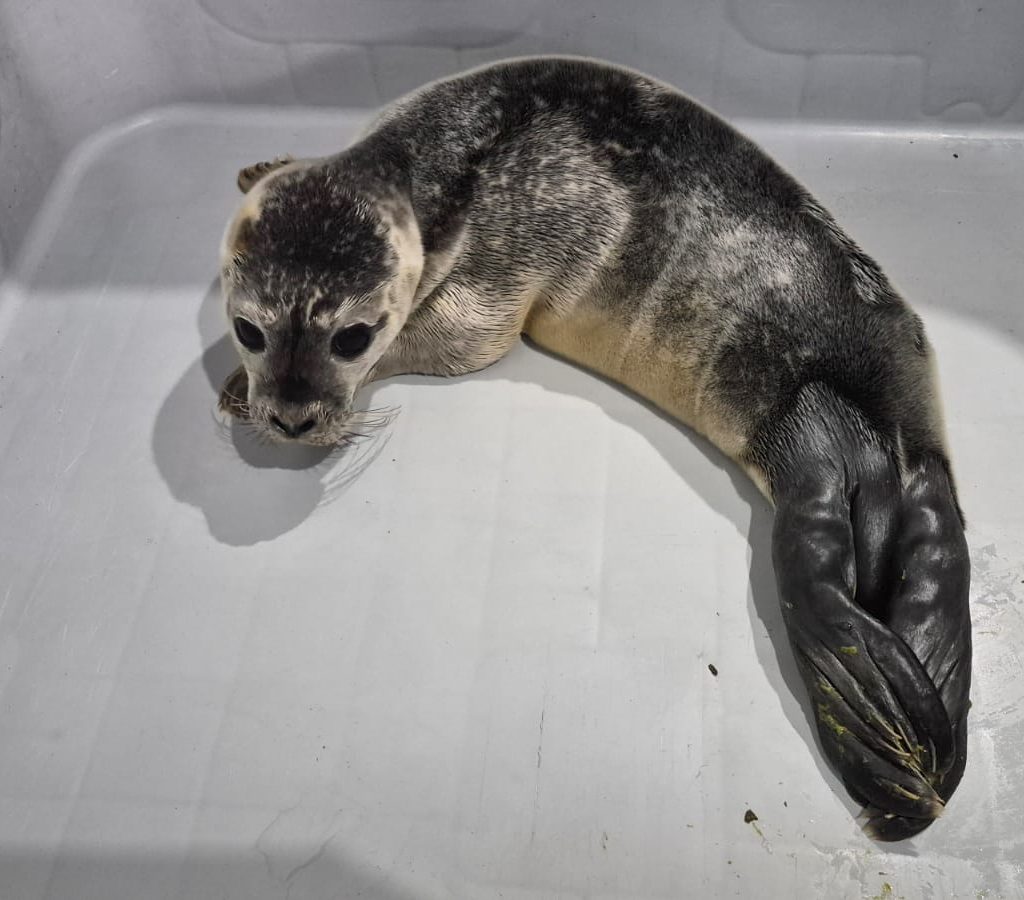
A tiny, week old common seal pup is now receiving specialist care after a multi-day rescue effort by British Divers Marine Life Rescue in Kent.
This week, the BDMLR hotline received a report from concerned beach visitors who spotted a young pup alone on the shoreline. Marine Mammal Medics were tasked to the beach, however the pup had returned to the sea before their arrival.
While this is a normal action for seals to choose to do, returning to the water meant concerns over the pup’s welfare remained. Our volunteers remained on site to monitor for any signs of the pup appearing again, as well as sharing advice with members of the public should the pup reappear.
The following day, the pup was reported to our hotline again, having been found and picked up by well-meaning individuals. Medics were quickly alerted, and those attending were able to take the young pup into care for overnight rehydration and stabilising. The pup was transferred the next day to a specialist rehabilitation centre where they will spend the next few months gaining weight before being released again.
Every pupping season, well-intentioned actions can unintentionally put seal pups at greater risk.
Female seals will regularly leave their pups alone for many hours while they head back to sea to feed, sometimes returning when beaches are quiet with no people in sight. Although a lone pup can appear abandoned, this can be a normal part of their behaviour.
If a pup is approached, crowded, stroked, picked up, or chased into the water, the mother may be discouraged from returning. In some cases, this can lead to genuine abandonment and leave the pup requiring rescue when they otherwise may not have needed help.
Human handling is also stressful for young seals, and poses risks to both the animal and the people involved. Seals are wild animals with powerful jaws and sharp teeth, capable of inflicting serious bites. They can also carry diseases and bacteria which can be transmitted through contact and bites, including seal herpesvirus and conditions such as ‘mouth rot’, which BDMLR has a five-year running project investigating.
If you discover a seal pup on a beach, remember the 5 S’s:
STOP — Don’t approach, touch, pick up or move the seal.
SPACE — Keep at least 100 metres away and keep dogs on leads.
SILENCE — Keep noise and crowds away so the seal is not disturbed.
SLEEP — Resting alone is normal and a vital part of renewing their energy reserves.
SUPPORT — If you are concerned, call BDMLR’s rescue hotline on 01825 765546 for advice.
The safest way to help is to step back and provide location details and images for attending BDMLR Marine Mammal Medics.